


What is the Best Treatment for a Fistula?
As a doctor, I often encounter patients who are understandably worried and uncomfortable when facing health conditions they find particularly difficult or embarrassing to discuss. A fistula is frequently one of these sensitive topics.
While the medical term “fistula” itself can sound quite alarming, I’m Dr. Jay Mehta, and my aim in this article is to clearly explain precisely what a fistula is and how we approach its treatment, using straightforward, empathetic, and easily understandable language.
My goal is to alleviate some of that initial apprehension and provide clarity on this condition.
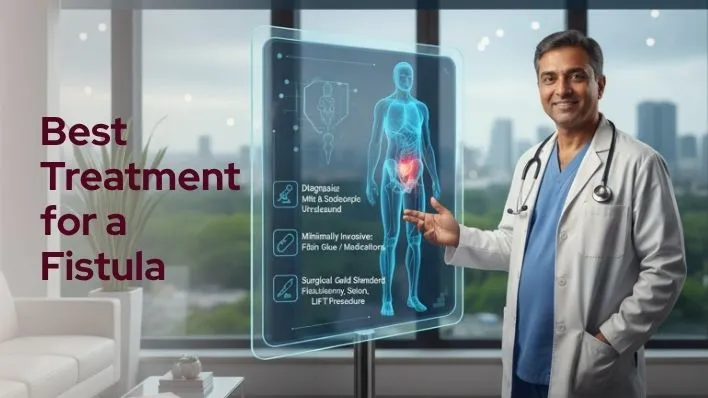

DR JAY MEHTA
Understanding What a Fistula Is?
Let’s start with the basics. What is a fistula? Imagine an abnormal tunnel forming inside your body where one shouldn’t exist. This passage can connect two organs or an organ to the surface of your skin.
While they can occur in various parts of the body, one of the most common types is an anal fistula. This is a small channel that develops from inside your anal canal to the skin near the anus. Other types include rectovaginal fistulas (between the rectum and vagina) or enterocutaneous fistulas (from the intestine to the skin).
The primary cause is often a previous infection, like an anal abscess. When an abscess—a collection of pus—drains, it can leave behind this tunnel.
Other causes include long-term inflammatory conditions such as Crohn’s disease, complications from surgery, or trauma to the area. The symptoms are usually quite noticeable and can include persistent pain, swelling, and redness.
Many people also experience a discharge of pus or fluid from an opening near the anus, which can sometimes be accompanied by a fever if the infection is active.
How We Diagnose a Fistula?
Finding the right treatment begins with a precise diagnosis. When you visit a specialist, the first step is usually a physical examination. We can often see the external opening of the fistula on the skin.
However, the real challenge is to map its complete path, including finding the internal opening inside the anal canal.
To get a clear picture, we may need to use advanced imaging tests. An MRI is excellent for this, as it provides detailed images of the fistula’s tract and its relationship with surrounding muscles, particularly the important sphincter muscles that control bowel movements.
Another useful tool is an endoscopic ultrasound, which uses sound waves to create an image from inside the anal canal. These tests help us classify the fistula as either simple (a straight, single tract) or complex (with multiple branches or involvement of sphincter muscles). Knowing the exact path is crucial for choosing the most effective and safest treatment.
For women experiencing complex or obstetric-related fistulas, specialized surgical options like Obstetric Fistula Repair in Mumbai can help restore both function and comfort. This treatment focuses on carefully repairing the damaged tissue and improving overall pelvic health, ensuring long-term healing and improved quality of life.
TALK TO US
GET IN TOUCH ON
Exploring Your all Treatment Options
Once we understand the fistula’s type and location, we can decide on the best course of action. It’s important to know that most fistulas require some form of intervention to heal properly; they rarely go away on their own.
⇒ Non-Surgical and Minimally Invasive Approaches
For certain types of fistulas, particularly those linked to inflammatory bowel disease, non-surgical options may be considered first. Medications like immunomodulators can help manage the underlying inflammation and allow the fistula to heal.
Another non-surgical method is the use of fibrin glue. This is a special medical glue that we inject into the fistula tract to seal it shut. While it’s a simple procedure, its success rate can be lower, especially for more complex cases.
⇒ Surgical Treatments: The Gold Standard
For the majority of anal fistulas, surgery is the most reliable path to a cure. The goal of any surgical procedure is to completely heal the fistula while preserving the function of the anal sphincter muscles to prevent incontinence.
The most common surgery is called a fistulotomy. This procedure involves carefully cutting open the entire length of the fistula tunnel. By laying it open, the tract can heal from the bottom up, eventually forming a flat scar.
For simple fistulas that don’t pass through much of the sphincter muscle, this procedure has a very high success rate.
If the fistula is more complex and involves a significant portion of the sphincter muscles, a fistulotomy might pose a risk to bowel control. In these situations, we have other excellent techniques.
One is the placement of a seton. A seton is a thin piece of surgical thread that is passed through the fistula tract and tied into a loop. It can be used to keep the fistula open to allow it to drain properly before another procedure, or it can be used to slowly cut through the muscle over several weeks, allowing the area to heal gradually as it cuts.
Another muscle-sparing technique is the advancement flap procedure. Here, we create a flap of healthy tissue from the rectal wall and use it to cover the internal opening of the fistula.
This allows the external tract to heal without cutting the sphincter muscles. The LIFT (Ligation of Intersphincteric Fistula Tract) procedure is another advanced option where we access the fistula between the sphincter muscles and seal it off without cutting them.
For women who develop fistulas related to childbirth injuries, timely treatment can make a life-changing difference. You can learn more about this condition and recovery options in our detailed blog on Obstetric Fistula Repair Success. This advanced repair focuses on restoring both function and confidence through delicate, personalized surgical care.
Life After Fistula Surgery
Recovery depends on the type of surgery you have. You can expect some discomfort for the first week or two, but this is manageable with pain relief medication.
We’ll give you clear instructions on how to care for the wound at home. This often includes taking sitz baths—soaking the area in warm water—which is very soothing and helps keep it clean.
Maintaining soft bowel movements is also key, so a diet high in fibre and plenty of water is essential. Full healing can take several weeks, and follow-up appointments are important to monitor your progress.
The vast majority of patients who undergo surgery at reputable Mumbai hospitals for cosmetic gynecology and related pelvic floor issues experience excellent outcomes and a significant improvement in their quality of life.
Frequently Asked Questions (FAQs)
1. Can diet and lifestyle changes cure a fistula on their own?
While a healthy diet high in fibre and good hydration can help manage symptoms like constipation and make bowel movements less painful, they cannot cure a fistula. A fistula is a physical tunnel that typically requires medical or surgical intervention to close and heal completely.
2. Is fistula surgery very painful?
Post-surgical pain is expected but is generally well-managed with prescribed pain medications. The initial discomfort usually subsides significantly within the first one to two weeks. Procedures like sitz baths also provide considerable relief during the recovery period.
3. What happens if a fistula is left untreated?
An untreated fistula will not heal on its own and can lead to complications. These may include recurrent abscesses, the formation of more complex, branching fistula tracts, and a persistent infection that can affect your overall health. In very rare, long-standing cases, there is a small risk of developing cancer within the fistula tract.
4. How long do I need to take off work after fistula surgery?
The recovery time varies depending on the complexity of the fistula and the type of surgery performed. For a simple fistulotomy, you might need one to two weeks off work. For more complex procedures, the recovery period could be longer. Your surgeon will provide specific guidance based on your individual situation.
5. Can a fistula come back after surgery?
There is a small chance of recurrence, especially with complex fistulas or in patients with underlying conditions like Crohn’s disease. However, choosing an experienced surgeon and following post-operative care instructions carefully can significantly reduce the risk of the fistula returning. Success rates for surgical treatment are generally very high.
Conclusion
Living with a fistula can be physically and emotionally draining, but it’s a highly treatable condition. The key is to seek expert medical advice without delay.
With the right diagnosis and a tailored treatment plan, you can find lasting relief and get back to living your life comfortably and confidently. The field of pelvic floor surgery has advanced significantly, and as a cosmetic gynecology expert in Mumbai, I am committed to offering the most effective and safest treatments available.
Ready to find a solution and reclaim your well-being? Schedule a consultation today at Ahalya Cosmetic Gynecology in Mumbai. Let’s work together to create a personalised treatment plan for you.
Related Blogs

When Vaginal Itching Needs a Doctor’s Visit?
Itching isn’t always an infection. Mumbai’s Dr. Jay Mehta explains the real causes, and when self-treatment isn’t the right approach.
Surgical Treatment for Perineal Endometriosis: Wide Excision Explained
A painful lump that worsens with your period isn’t ordinary scar pain. Mumbai’s Dr. Jay Mehta explains diagnosis and when excision is needed.

Best Gynecologist for Recurrent Genital Infections in Mumbai
Recurring symptoms aren’t always the same infection. Mumbai’s Dr. Jay Mehta explains why, and what actually needs re-evaluating.
Can Perineal Endometriosis Come Back After Surgery?
Yes, but the odds favour most patients. Mumbai’s Dr. Jay Mehta explains what actually drives recurrence, and how to lower your risk.
Does Perineal Endometriosis Always Need Surgery?
No, not always. Mumbai’s Dr. Jay Mehta explains when hormonal therapy can work, and when surgery becomes the better option.
How to Find a Menopause Specialist Who Understands GSM Treatments
Look beyond hot flashes. Mumbai’s Dr. Jay Mehta explains what a good GSM consultation should cover, and the questions worth asking.
Can Vaginal Itching Without Discharge Really Be a Skin Condition?
Vaginal itching without discharge can be caused by skin irritation, dryness, eczema or other conditions. Know the causes, treatment and warning signs.

Why Do Postmenopausal Women Experience Vaginal Itching Without Infection?
Yes, declining estrogen alone can cause itching after menopause. Mumbai’s Dr. Jay Mehta explains why, and what actually helps.
Is Vaginal Itching After Sex Always Due to an Infection?
No, it’s not always an infection. Mumbai’s Dr. Jay Mehta explains how friction, allergies and pH shifts can all cause itching too.

Can Laundry Detergent Cause Chronic Vaginal Itching?
Yes, detergent is an overlooked cause of vaginal itching. Mumbai’s Dr. Jay Mehta explains why it’s mistaken for infection, and the fix.
Book Appointment
