


Surgical Treatment for Perineal Endometriosis
A painful lump or swelling near an old episiotomy scar that becomes worse during your period should not be dismissed as ordinary scar pain.
I’m Dr. Jay Mehta, a gynecologist at Ahalya Cosmetic Gynecology Clinic in Mumbai, and I often see women who have spent months trying to understand this type of pain.
If you’re looking for perineal endometriosis excision in Mumbai, the first step is confirming the diagnosis and understanding exactly where the endometriotic tissue is located.

DR JAY MEHTA
Key Takeaways
- Perineal endometriosis can cause cyclical pain, swelling, or a lump near the perineum or an old episiotomy scar.
- Diagnosis may involve examination, ultrasound, MRI, and additional imaging when deeper structures are involved.
- Surgical excision is commonly used to remove the lesion and confirm the diagnosis through histopathology.
- Anal sphincter involvement needs careful assessment and surgical planning.
- Treatment should be planned according to the size, depth, location, and extent of the lesion.
What exactly is perineal endometriosis?
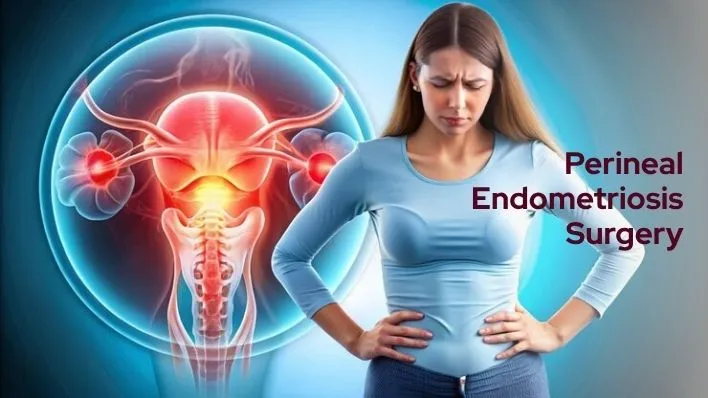
Perineal endometriosis is endometriotic tissue located in the perineum, the area between the vagina and anus.
It is a form of extrapelvic endometriosis, meaning the endometriotic tissue is outside the usual pelvic locations. It may develop in the skin or deeper tissues of the vulva and perineum and can sometimes involve the muscles around the anal sphincter.
In many reported cases, there is a history of episiotomy or other perineal injury. However, previous perineal trauma is not present in every woman.
The typical clue is a painful swelling or nodule that becomes more painful around menstruation.
TALK TO US
GET IN TOUCH ON
Why does my episiotomy scar hurt during my period?
Cyclical pain or swelling at an old episiotomy scar can be a warning sign of scar endometriosis.
Some women notice that the area becomes tender, swollen, or painful before or during their periods. A lump may also gradually become more noticeable.
This is why episiotomy scar endometriosis treatment should begin with a proper assessment rather than assuming the discomfort is simply an old surgical scar.
A systematic review found that cyclical vulvo-perineal pain was the main reason women sought medical care, and most reported patients had a palpable nodule, mass, or swelling.
The timing of your symptoms is an important part of the medical history. If you want to see how the classic pattern looks in practice, the typical symptoms of perineal endometriosis, including cyclical pain and nodules, are covered in more detail separately.
How is perineal endometriosis diagnosed?
Diagnosis usually starts with a detailed history and physical examination, followed by imaging when appropriate.
During a consultation, I want to know:
- Whether the pain follows your menstrual cycle
- Whether there is a lump, swelling, or thickened area
- Whether you previously had an episiotomy or perineal procedure
- Whether the pain affects sitting, walking, intercourse, or bowel movements
- Whether you have symptoms suggesting pelvic endometriosis
- Whether the lesion has changed in size over time
A perineal ultrasound can help identify the location and depth of a lesion. Pelvic MRI may provide further information when deeper disease is suspected. If the lesion appears close to the anal sphincter, an endoanal or perianal ultrasound may also be considered.
For a step-by-step look at what each test involves, how perineal endometriosis is diagnosed with MRI, ultrasound and biopsy is explained in more detail separately.
Do I need an MRI before perineal endometriosis surgery?
An MRI may be useful when the lesion is deep, extensive, or close to important structures.
Not every patient needs exactly the same imaging. The decision depends on the examination and suspected extent of disease.
MRI can help the surgeon understand the relationship between the lesion and surrounding tissues before planning surgery. This becomes particularly relevant when there is concern about anal sphincter involvement or deeper extension.
I also explain to patients that imaging supports the diagnosis, but histopathological examination of the removed tissue is important for confirming endometriosis.
A published case report on perineal endometriosis in an episiotomy scar, hosted by the U.S. National Library of Medicine, shows how ultrasound and MRI findings were used together to reach the diagnosis.
Does perineal endometriosis require surgery?
Surgical excision is commonly the definitive treatment when a localized perineal endometriosis lesion has been diagnosed.
The aim is to remove the endometriotic tissue while preserving the surrounding structures as safely as possible.
The exact operation depends on the lesion’s:
- Size
- Depth
- Location
- Relationship to the vagina and rectum
- Involvement of the perineal muscles
- Possible anal sphincter involvement
Published reviews describe surgical excision as the main treatment for vulvo-perineal endometriosis, with hormonal treatment sometimes used before or after surgery in selected situations.
Our perineal endometriosis treatment page explains how we assess which approach fits a particular lesion.
What happens if the endometriosis involves the anal sphincter?
Anal sphincter involvement requires more careful preoperative assessment and surgical planning.
The anal sphincter is important for bowel control, so a lesion involving this muscle cannot be approached in exactly the same way as a superficial lesion.
Studies of perineal endometriosis have specifically emphasized assessing sphincter involvement before surgery. Surgical techniques may need to include repair of the sphincter when part of the muscle is involved.
This is one reason I consider the depth and exact location of the lesion before deciding how an excision should be performed.
Can hormonal treatment remove perineal endometriosis?
Hormonal treatment can sometimes help control symptoms or reduce lesion size, but it doesn’t physically remove established endometriotic tissue.
Depending on the individual situation, hormonal medicines may be considered before surgery, after surgery, or when surgery needs to be deferred.
The evidence reviewed in published literature suggests that medical treatment can provide symptom relief or help reduce the size of some lesions, while surgical excision remains the main definitive treatment for localized vulvo-perineal disease.
The choice should be individualized rather than assuming that hormones or surgery are appropriate in exactly the same way for everyone.
How extensive can perineal endometriosis become?
The lesion can remain relatively localized or extend into deeper perineal tissues, which is why proper assessment matters.
A superficial nodule and a lesion close to the anal sphincter present different surgical considerations.
Some patients may also have pelvic endometriosis at the same time. Published case series have found pelvic involvement in a minority of patients with perineal disease.
If you have symptoms such as pelvic pain, painful periods, painful intercourse, bowel symptoms, or other features of endometriosis, these should also be discussed during your consultation.
Can perineal endometriosis come back after excision?
Recurrence is possible, particularly when endometriotic tissue remains after the initial procedure.
Published evidence is limited because this condition is uncommon and much of the literature consists of case reports and small retrospective studies.
A systematic review reported recurrence in approximately 10% of the cases with available follow-up, although follow-up duration and surgical techniques varied considerably.
Research has also reported recurrence in association with incomplete excision and sphincter involvement.
This doesn’t mean recurrence will happen to you. It means long-term follow-up and appropriate surgical planning are important parts of care.
What should I look for in a surgeon for perineal endometriosis?
I would suggest looking for a gynecologic surgeon who understands both endometriosis and the anatomy of the perineum.
Because this is an uncommon form of endometriosis, the consultation should address more than simply removing a visible lump.
You should be able to discuss:
- Whether the lesion is superficial or deep
- Whether imaging is required
- Whether the anal sphincter is involved
- How the lesion will be excised
- Whether reconstruction may be required
- How the tissue will be sent for histopathology
- What follow-up will be needed
- Whether hormonal treatment has a role in your individual case
At Ahalya Cosmetic Gynecology Clinic in Mumbai, I evaluate perineal endometriosis with attention to the lesion’s location and extent and plan treatment according to the individual clinical findings.
If you want to understand what the operation itself involves, how wide local excision is performed and why the margin matters is explained step by step.
What can recovery be like after excision?
Recovery depends largely on the size and depth of the excision and whether deeper muscles or the anal sphincter are involved.
A smaller superficial excision may have different recovery needs from surgery involving deeper perineal tissues.
I advise patients to follow their postoperative wound-care instructions carefully and attend scheduled follow-ups. You should also tell your surgeon promptly about increasing pain, wound problems, fever, unusual discharge, or bowel-control changes after surgery.
Your recovery plan should be based on the actual procedure performed rather than a fixed timeline.
When should I see a gynecologic surgeon for perineal pain?
You should arrange an assessment if you have a recurrent painful lump, swelling, or perineal pain that follows your menstrual cycle.
You should also seek evaluation if:
- An old episiotomy scar becomes painful during periods
- A lump is increasing in size
- Pain makes sitting or walking uncomfortable
- You experience pain during intercourse
- There is pain or pressure around the rectum
- Previous treatment hasn’t explained or resolved the problem
Perineal endometriosis is uncommon, but recognizing the pattern can help prevent a prolonged search for the cause.
If you have been diagnosed with perineal endometriosis or have a painful cyclical perineal lump and want an assessment, you can consult me, Dr. Jay Mehta, Perineal endometriosis surgeon in Mumbai. I can review your examination findings and imaging and discuss whether surgical excision is appropriate for your particular lesion.
Frequently Asked Questions (FAQs)
1. Can endometriosis occur in an episiotomy scar?
Yes. Endometriotic tissue can develop in an episiotomy or other perineal scar and may cause cyclical pain, swelling, or a palpable lump.
2. Why does my episiotomy scar hurt during my period?
A painful episiotomy scar during menstruation can have several causes, but cyclical pain with swelling or a lump should be assessed for scar endometriosis.
3. Can perineal endometriosis occur without an episiotomy?
Yes. Most reported cases have a history of perineal trauma or surgery, but cases without an obvious previous injury have also been reported.
4. Can perineal endometriosis affect the anal sphincter?
Yes. Deeper lesions can involve the anal sphincter, which is why imaging may be recommended when the lesion is close to the anal canal.
5. Can a perineal endometrioma be treated without surgery?
Hormonal treatment may help control symptoms or reduce lesion size in selected situations, but it doesn’t remove the established lesion. Surgical excision is commonly used for definitive treatment.
6. Will removing the lesion affect bowel control?
It depends on whether the lesion involves the anal sphincter and what surgery is required. When sphincter involvement is suspected, careful preoperative assessment and appropriate surgical repair planning are important.
7. How long can perineal endometriosis remain undiagnosed?
It can remain unrecognized for months or years because it is uncommon and symptoms may be mistaken for ordinary scar pain or other conditions. A cyclical pattern can provide an important diagnostic clue.
8. Can perineal endometriosis happen after a normal vaginal delivery?
Yes. Perineal endometriosis is often associated with episiotomy or perineal injury, but the absence of a known injury does not completely exclude the diagnosis.
9. Can I have pelvic endometriosis and perineal endometriosis together?
Yes. Some patients with perineal disease also have pelvic endometriosis, so other symptoms should be assessed rather than focusing only on the perineal lesion.
10. Can perineal endometriosis come back after excision?
Yes, recurrence is possible, particularly when disease remains after surgery. Published evidence suggests that follow-up is important, although recurrence estimates vary because the available studies are small and heterogeneous.
Final Thoughts
Perineal endometriosis is uncommon, but a cyclical painful lump or swelling around an episiotomy scar deserves proper evaluation. The right treatment depends on the lesion’s location, depth, symptoms, and involvement of surrounding structures.
A careful diagnosis and individualized surgical plan are important, particularly when the lesion is close to the anal sphincter.
This article is for general educational purposes only. It does not replace an individual medical consultation, physical examination, diagnosis, or personalized treatment plan. Treatment should be decided by a qualified healthcare professional after assessing your individual condition.
Related Blogs

When Vaginal Itching Needs a Doctor’s Visit?
Itching isn’t always an infection. Mumbai’s Dr. Jay Mehta explains the real causes, and when self-treatment isn’t the right approach.

Best Gynecologist for Recurrent Genital Infections in Mumbai
Recurring symptoms aren’t always the same infection. Mumbai’s Dr. Jay Mehta explains why, and what actually needs re-evaluating.
Can Perineal Endometriosis Come Back After Surgery?
Yes, but the odds favour most patients. Mumbai’s Dr. Jay Mehta explains what actually drives recurrence, and how to lower your risk.
Does Perineal Endometriosis Always Need Surgery?
No, not always. Mumbai’s Dr. Jay Mehta explains when hormonal therapy can work, and when surgery becomes the better option.
How to Find a Menopause Specialist Who Understands GSM Treatments
Look beyond hot flashes. Mumbai’s Dr. Jay Mehta explains what a good GSM consultation should cover, and the questions worth asking.
Can Vaginal Itching Without Discharge Really Be a Skin Condition?
Vaginal itching without discharge can be caused by skin irritation, dryness, eczema or other conditions. Know the causes, treatment and warning signs.

Why Do Postmenopausal Women Experience Vaginal Itching Without Infection?
Yes, declining estrogen alone can cause itching after menopause. Mumbai’s Dr. Jay Mehta explains why, and what actually helps.
Is Vaginal Itching After Sex Always Due to an Infection?
No, it’s not always an infection. Mumbai’s Dr. Jay Mehta explains how friction, allergies and pH shifts can all cause itching too.

Can Laundry Detergent Cause Chronic Vaginal Itching?
Yes, detergent is an overlooked cause of vaginal itching. Mumbai’s Dr. Jay Mehta explains why it’s mistaken for infection, and the fix.

Why Does Vaginal Itching Feel Worse at Night?
Yes, nighttime itching is physically real, not just in your head. Mumbai’s Dr. Jay Mehta explains why, and what actually helps.
Book Appointment
