


What Are the Benefits of Taking Probiotic Supplements?
Welcome to our guide on inner wellness. You might be wondering, what are the benefits of taking probiotic supplements?
Simply put, they introduce helpful, live bacteria into your system to support your gut, boost immunity, maintain intimate health balance, and even benefit whole-body wellbeing for all ages and genders.
Hello, I am Dr. Jay Mehta. Over my 13+ years of experience in women’s health, I have seen firsthand how restoring microbial balance can beautifully transform a patient’s daily comfort and vitality, whether you’re a woman, man, child, or older adult.


DR JAY MEHTA
Key Takeaways
- Probiotics are live, beneficial microorganisms that actively support digestion, immunity, skin health, and intimate wellness for the entire family.
- The right daily dose is typically in the range of 5–20 billion CFUs (Colony Forming Units) for adults, with doses for children best determined under medical supervision.
- Different strains offer different health benefits: Lactobacillus helps vaginal and gut health, Bifidobacterium supports colon and immune health, Saccharomyces boulardii is effective for diarrhea prevention, and spore-based Bacillus strains are resilient and good for travel or harsh digestive environments.
- Spore-based probiotics (e.g., Bacillus coagulans) have a tough outer shell for survival and long shelf life, while live-culture probiotics from foods or supplements require refrigeration and are best for direct gut support.
- A balanced microbiome impacts physical health and emotional balance, easing anxiety or mild depression.
- Guidance is available for everyone, including men, children, elderly, pregnant/breastfeeding women, and those with chronic illness or compromised immunity (with medical advice).
TALK TO US
GET IN TOUCH ON
At our practice, we believe that true wellness starts from deep within. When people visit the cosmetic gynecology clinic, they seek not just solutions for intimate discomfort but also for broader wellness—skin, digestion, mood, and even post-surgical recovery.
A significant part of holistic healing involves understanding the balance of your body’s microbiome and tailoring strains and doses to life stage, gender, and health status.
By nourishing your system with the right bacteria and using clinically supported dosages, you build a robust foundation for lasting, resilient health.
What Exactly Are Probiotics and How Do They Work in My Body?
Clinical explanation: Probiotics are live bacteria and yeasts—like Lactobacillus, Bifidobacterium, Saccharomyces (a beneficial yeast), and Bacillus (spore-formers)—that support digestive, immune, skin, mental, and intimate health.
While Lactobacillus targets vaginal and gut flora, Bifidobacterium lives mostly in the colon and boosts immunity, and Saccharomyces boulardii excels for antibiotic-associated or traveler’s diarrhea.
Live-culture probiotics require refrigeration but deliver direct gut benefits.
Spore-based probiotics (like Bacillus coagulans) are heat-stable, ideal for travel and post-antibiotics, and survive stomach acid more easily.
Patient impact: These microbes restore or maintain equilibrium, outcompeting harmful bacteria and producing anti-inflammatory compounds.
They also enhance nutrient absorption for children and older adults, help reduce eczema flare-ups and acne, and balance vaginal pH to resist UTIs.
Why Might My Gut and Intimate Microbiome Become Imbalanced?
Diagnostic steps & causes: Microbiome imbalance (dysbiosis) can result from antibiotics, travel, high-sugar diets, stress, hormone shifts (many during pregnancy or menopause), poor sleep, aging, chronic illness, or surgery.
For example, a lack of protective Lactobacillus can lead to infections; understanding the difference between
Even infants and children can have imbalances leading to colic or digestive issues.
Groups at risk:
- Pregnant and breastfeeding women: Hormones and immune changes shift the microbiome; evidence suggests some strains may reduce gestational diabetes risk or pediatric eczema/allergy.
- Men: Stress, diet, and antibiotics can disturb gut and skin flora—choosing the right strain supports digestive, immune, and even prostate health.
- Elderly: Age and medications make the gut more vulnerable; multi-strain and higher CFU products can support immunity and constipation.
- Children: Special pediatric blends and lower doses under medical advice ease colic and tummy troubles.
- Immunocompromised or chronically ill: Medical clearance is essential, as some probiotics may pose a rare infection risk or interact with immunosuppressant drugs.
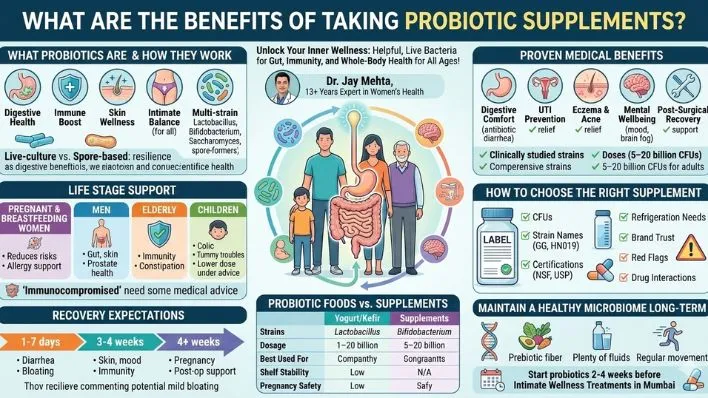
What Are the Proven Medical Benefits of Daily Probiotic Supplements?
Treatment approach: Beyond digestive comfort, clinical evidence supports probiotics for:
- Reducing antibiotic or infection-related diarrhea (especially Saccharomyces boulardii, Lactobacillus rhamnosus GG, and Bifidobacterium blends at 10–20 billion CFUs per day)
- Decreasing severity or recurrence of urinary tract infections (with Lactobacillus reuteri and L. rhamnosus)
- Easing eczema and acne in children and adults (L. paracasei, B. lactis, L. plantarum)
- Aiding mental wellbeing (select Lactobacillus and Bifidobacterium strains help ease anxiety, depression, and brain fog)
- Supporting mild, non-specific post-surgical recovery by restoring microbial diversity and reducing infection risk
For women, Lactobacillus crispatus and L. reuteri are especially useful vaginally, but men and the elderly get significant benefit from Bifidobacterium strains for immunity and gut regularity.
As a cosmetic gynecology expert , I remind patients that tailored strain selection, proper CFU dosage, and combination with diet/lifestyle make all the difference.
Take the Next Step for Your Health
If you or your family are struggling with digestive, skin, or intimate concerns, or for pregnancy/post-surgical support, book a consultation at Ahalya Cosmetic Gynecology: Call or Book an Appointment Here
Probiotic Foods vs. Probiotic Supplements
| Feature | Probiotic Foods (Yoghurt, Kefir) | Probiotic Supplements |
| Bacterial Strain | General, untargeted (Lacto, Bifido) | Specific, clinically studied (Lacto, Bifido, Saccharomyces, Bacillus) |
| Dosage (CFUs) | Variable, typically 1–5 billion | 5–50+ billion, measured/proven per label |
| Best Used For | Daily maintenance | Medical support, targeted benefits, travel |
| Shelf Stability | Needs refrigeration | Spore-based can be shelf-stable |
| Pregnancy Safe? | Yoghurt, kefir safe; check label | Check for “pregnancy safe,” consult doctor |
How Do I Choose the Right Probiotic Supplement? (Label Advice & Practical Tips)
Reading labels:
- CFUs: Look for at least 5 billion CFUs for general wellness; 10–20+ billion for specific conditions. For children, use lower doses as recommended by a pediatrician.
- Strain Names: Require full names (e.g., Lactobacillus rhamnosus GG, Bifidobacterium lactis HN019).
- Certifications: Seek products with third-party testing/verification (e.g., NSF, USP, ISAPP). Avoid vague “proprietary blend” claims.
- Refrigeration: Check shelf-stable vs. refrigerated requirements.
- Brand Trust: Choose brands with clear scientific studies or clinical support.
- Red Flags: Avoid supplements with artificial colors/flavors, no listed expiry, or unverifiable source.
Drug Interactions:
- Immunosuppressant users or those post-transplant/surgery must consult their doctor before any probiotics. Probiotics may interact with anti-fungal or immunomodulating medications.
How Long Does It Take to Feel the Effects of Probiotics?
Recovery expectations:
- Digestive symptoms may improve within days (especially diarrhea, bloating).
- Eczema/acne, mental health, UTI prevention, or immune balance usually need 3–4 weeks of consistent daily use.
- Pregnancy, postoperative support, or elderly immunity: Allow 4+ weeks.
Some mild bloating/gas is common as the microbiome adjusts—usually self-limiting.
Can Probiotics Actually Improve My Skin, Mood, and Post-Surgical Recovery?
Skin health: Specific strains can calm eczema, reduce acne breakouts, and restore the skin barrier (L. rhamnosus, B. longum).
Mental health: The gut-brain axis means probiotics can help support mood balance, sleep, and concentration (especially L. helveticus, B. infantis, B. breve).
UTI prevention: Women benefit from Lactobacillus for reducing recurrent infections; men benefit from other strains that support urinary tract health.
Post-surgical recovery: Multi-strain or spore-based probiotics replenish good microbes after antibiotics or surgery, supporting immune defense.
How Can I Maintain a Healthy Microbiome for the Long Term?
Preventive awareness and long-term care: Combine probiotics with prebiotic fiber (from bananas, oats, legumes), plenty of fluids, and regular movement.
For expectant or breastfeeding mothers, select only supplements or foods clearly labeled as safe during pregnancy/lactation.
If you are planning an intimate wellness treatment in Mumbai, start probiotics 2–4 weeks before and continue post-procedure for optimal, comfortable healing.
Always maintain regular check-ins to ensure your chosen supplement fits your unique health profile and medication history.
Frequently Asked Questions (FAQs)
1. Should I take my probiotic supplement on an empty stomach?
It’s generally best to take probiotics 30 minutes before a meal for highest survival, but follow product-specific instructions. For those with sensitive stomachs, try with food.
2. Is it safe for everyone to take probiotics daily?
Most healthy adults and children can take probiotics. If you are pregnant, breastfeeding, elderly, immunosuppressed, or have chronic illness, use only approved, well-studied strains after discussing with your doctor.
3. Which probiotic strains are best for mental health, skin, or post-surgical recovery?
L. helveticus and B. longum are linked to mood and brain support; L. rhamnosus and B. lactis for skin and UTI prevention; spore-based Bacillus and Saccharomyces for gut recovery after antibiotics or surgery.
4. How do I know if a supplement brand is reliable?
Choose those with third-party certification, published clinical data, and transparent labeling. Steer clear of “proprietary blends” and unclear expiry dates.
5. Are there drug or supplement interactions to watch out for?
If you take immunosuppressants, antifungals, or recover from major illness/surgery, consult your doctor. Probiotics could rarely cause infection in these scenarios without oversight.
Conclusion
Your body—even beyond the gut—is deeply influenced by the right probiotics: from skin to mood, surgery recovery to chronic illness, and at every stage from childhood to old age.
With expert guidance, targeted strain and dosage, and trusted supplement choices, you empower your healthiest, most resilient self.
And here at Ahalya Cosmetic Gynecology, Mumbai, we are dedicated to supporting every step of your wellness journey—with trusted, science-backed care.
Related Blogs

When Vaginal Itching Needs a Doctor’s Visit?
Itching isn’t always an infection. Mumbai’s Dr. Jay Mehta explains the real causes, and when self-treatment isn’t the right approach.
Surgical Treatment for Perineal Endometriosis: Wide Excision Explained
A painful lump that worsens with your period isn’t ordinary scar pain. Mumbai’s Dr. Jay Mehta explains diagnosis and when excision is needed.

Best Gynecologist for Recurrent Genital Infections in Mumbai
Recurring symptoms aren’t always the same infection. Mumbai’s Dr. Jay Mehta explains why, and what actually needs re-evaluating.
Can Perineal Endometriosis Come Back After Surgery?
Yes, but the odds favour most patients. Mumbai’s Dr. Jay Mehta explains what actually drives recurrence, and how to lower your risk.
Does Perineal Endometriosis Always Need Surgery?
No, not always. Mumbai’s Dr. Jay Mehta explains when hormonal therapy can work, and when surgery becomes the better option.
How to Find a Menopause Specialist Who Understands GSM Treatments
Look beyond hot flashes. Mumbai’s Dr. Jay Mehta explains what a good GSM consultation should cover, and the questions worth asking.

Can Vaginal Itching Without Discharge Really Be a Skin Condition?
Vaginal itching without discharge can be caused by skin irritation, dryness, eczema or other conditions. Know the causes, treatment and warning signs.
Why Do Postmenopausal Women Experience Vaginal Itching Without Infection?
Yes, declining estrogen alone can cause itching after menopause. Mumbai’s Dr. Jay Mehta explains why, and what actually helps.
Is Vaginal Itching After Sex Always Due to an Infection?
No, it’s not always an infection. Mumbai’s Dr. Jay Mehta explains how friction, allergies and pH shifts can all cause itching too.

Can Laundry Detergent Cause Chronic Vaginal Itching?
Yes, detergent is an overlooked cause of vaginal itching. Mumbai’s Dr. Jay Mehta explains why it’s mistaken for infection, and the fix.
Book Appointment
