


Is Labiaplasty Painful? Procedure and Pain Management Guide
The fear of pain is one of the most significant concerns for anyone considering a surgical procedure, and this is especially true for an intimate surgery like labiaplasty.
At Ahalya Cosmetic Gynaecology in Mumbai, we understand that your questions about discomfort are just as important as your questions about results.
With Dr. Jay Mehta’s 13+ years of specialised experience, we prioritise making your journey as comfortable as possible.
To answer your main question directly: while the labiaplasty procedure itself is made painless with anaesthesia, you may experience manageable discomfort during the first week of recovery. With appropriate pain management and personalised aftercare, effective labiaplasty pain treatment in Mumbai can help make the recovery period more comfortable.

DR JAY MEHTA
Key Takeaways: Labiaplasty Pain and Recovery at a Glance
-
The labiaplasty procedure itself is painless due to the use of anaesthesia.
-
Temporary discomfort after surgery is normal and effectively managed with medication and proper care.
-
The first week is the most uncomfortable, with noticeable improvement from week two.
-
Sensations like swelling, soreness, or mild stinging are expected and short-lived.
-
Most patients resume routine activities within 1–2 weeks, with complete healing by around 6 weeks.
-
When performed by an experienced cosmetic gynaecologist, labiaplasty leads to lasting comfort, confidence, and improved quality of life.
TALK TO US
GET IN TOUCH ON
What happens during a labiaplasty procedure?
Understanding the procedure is the first step in alleviating fears about pain. Labiaplasty is a precise surgical procedure designed to reduce the size of the labia minora (the inner lips) to relieve physical discomfort or for aesthetic reasons.
It is typically performed as an outpatient procedure, meaning you can go home the same day.
The process begins with a detailed consultation where your anatomy and goals are discussed.
Dr. Mehta will recommend the best surgical technique for you, usually either the ‘trim’ method (removing the outer edge) or the ‘wedge’ method (removing a pie-shaped section to preserve the natural border).
During the surgery, which lasts about one to two hours, the area is completely numbed using either a local anaesthetic or sedation.
You will not feel any pain during the procedure itself. The chosen technique is then used to remove the excess tissue with precision, and the incisions are closed with fine, dissolvable stitches.
If you’re still weighing whether labiaplasty is the right call versus a non-surgical option, our comparison of labiaplasty versus labia puffing walks through which one actually addresses physical discomfort versus appearance alone.
How much pain should I expect immediately after surgery?
Once the anaesthesia wears off in the hours following your procedure, you will start to feel some discomfort.
Most patients describe this sensation not as sharp pain, but as a combination of soreness, burning, and stinging, particularly when urinating.
The first 48 hours are typically the most uncomfortable. This is when swelling and tenderness are at their peak. It is crucial during this time to rest as much as possible and stay ahead of the pain by taking your prescribed medications on schedule, rather than waiting for the discomfort to become severe.
We ensure you leave the cosmetic gynaecology clinic in Mumbai with a clear plan to manage this initial phase.
How is pain managed after labiaplasty?
A proactive and multi-faceted approach to pain management is key to a comfortable recovery. Our protocol at Ahalya Cosmetic Gynaecology is designed to address discomfort from all angles.
Your pain management plan will include:
- Prescription Medication: We will provide you with pain relief medication to manage the initial, more intense discomfort. It is important to take this as directed.
- Anti-Inflammatory Drugs: These medications help to reduce swelling, which is a primary source of pain.
- Cool Compresses: Applying a cool pack (wrapped in a soft cloth) to the area for 15-20 minutes at a time is highly effective. This constricts blood vessels, reduces swelling, and provides a numbing effect. Bags of frozen peas work well as they mould to the area.
- Rest and Elevation: Limiting activity and resting with your hips elevated on pillows helps to decrease swelling and pressure on the surgical site.
As a leading cosmetic gynaecology expert in Mumbai, Dr. Jay Mehta tailors this plan to each patient, ensuring your recovery is as smooth and pain-free as possible. If you want a general reference on how post-surgical pain and incision care work outside our specific protocol, the U.S. National Library of Medicine’s MedlinePlus guide to recovering after surgery covers the basics of incision care and pain control that apply broadly to any procedure.
Are concerns about pain holding you back from comfort and confidence?
You do not have to let fear guide your decisions. We invite you to book a consultation at Ahalya Cosmetic Gynaecology, where we can address all your concerns in a private, supportive environment. Let us create a personalised plan for your comfort.
What is the pain and recovery timeline week by week?
Knowing what to expect can make the recovery process feel much more manageable. While everyone heals differently, having a clear
- Week 1 (The Discomfort Phase): This is the most challenging week. You will experience noticeable swelling, bruising, and soreness. You should focus entirely on rest and pain management. By the end of the week, the sharpest discomfort should begin to fade.
- Week 2 (The Improvement Phase): You will feel a significant improvement. Swelling will start to subside, and pain should be minimal, often manageable with over-the-counter medication if needed. Many patients with desk jobs return to work during this week.
- Weeks 3-4 (The Healing Phase): Discomfort should be gone, though you might experience some itching as the incisions heal. This is a normal sign of recovery. You can gradually increase your activity level but must still avoid strenuous exercise.
- Weeks 5-6 (The ‘Almost There’ Phase): You will feel mostly back to normal. The 6-week mark is a major milestone, as it is often when you are cleared to resume all activities, including exercise and sexual intercourse.
This structured timeline helps you understand that the period of significant pain is short, paving the way for a lifetime of comfort.
What are some practical tips for staying comfortable?
Beyond medication, several simple tips can make a huge difference during your labiaplasty treatment in Mumbai recovery:
- Wear Loose Clothing: Avoid tight trousers and underwear that can cause friction. Loose-fitting skirts, dresses, and soft cotton underwear are ideal.
- Use a Peri-Bottle: Instead of wiping with toilet paper, which can be abrasive, use a squirt bottle with lukewarm water to gently rinse the area after urinating. Then, pat the area dry with a clean, soft cloth.
- Stay Hydrated and Eat Well: Drinking plenty of water and eating a diet rich in fibre can prevent constipation, avoiding any strain on the pelvic area during bowel movements.
Use a Doughnut Pillow: If sitting is uncomfortable, a doughnut-shaped pillow can help relieve direct pressure on the surgical site.
Frequently Asked Questions (FAQs)
1. Will I be awake during the labiaplasty procedure?
This depends on the type of anaesthesia you and Dr. Mehta decide upon. The procedure can be done under local anaesthesia (where you are awake but the area is numb) or with sedation (where you are in a light, sleepy state). In either case, you will not feel pain during the surgery.
2. How long does the stinging sensation last when urinating?
The stinging sensation is most common in the first few days after surgery and is caused by urine coming into contact with the fresh incisions. Rinsing the area with a peri-bottle immediately after urinating helps to dilute the urine and soothe the skin, and this discomfort typically resolves within a week.
3. Is one side likely to be more painful than the other?
Yes, this is very common. It is normal for one side to swell or bruise more than the other, which can lead to a temporary difference in comfort levels. This asymmetry in healing is normal and usually evens out as the recovery progresses.
4. Can I use over-the-counter pain relief instead of prescription medication?
For the first 1-3 days, prescription medication is often necessary to manage the peak discomfort. After that, many patients find they can comfortably switch to over-the-counter options like paracetamol. However, you must avoid blood-thinning painkillers like aspirin or ibuprofen unless approved by Dr. Mehta.
5. Will sexual intercourse be painful after I am healed?
No. Once you are fully healed (after the 6-week mark), sexual activity should not be painful. In fact, many women who previously experienced pain during intercourse due to pulling or tearing of the labia report that sex becomes more comfortable and pleasurable after recovery.
Conclusion
While it is natural to be apprehensive about pain, a labiaplasty procedure performed by an experienced surgeon is designed to be as comfortable as possible.
The most significant discomfort is confined to the first few days and is well-managed with a robust post-operative care plan.
At Ahalya Cosmetic Gynaecology, our priority is to guide you through this brief recovery period with empathy and expertise, leading you towards the lasting comfort and confidence you deserve.
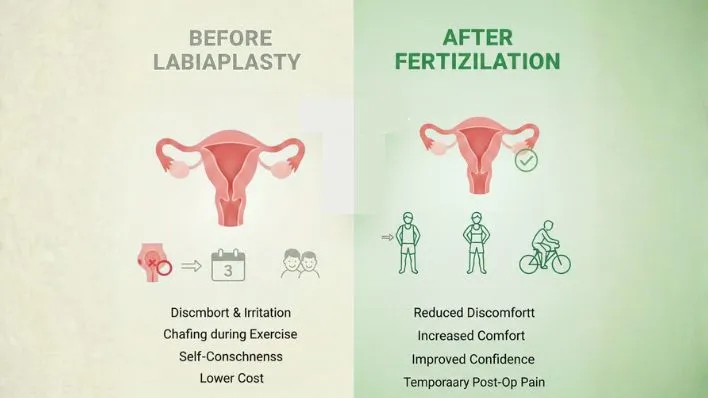
The temporary discomfort is a small price to pay for a lifetime of freedom from irritation and self-consciousness.
Related Blogs
When Vaginal Itching Needs a Doctor’s Visit?
Itching isn’t always an infection. Mumbai’s Dr. Jay Mehta explains the real causes, and when self-treatment isn’t the right approach.
Surgical Treatment for Perineal Endometriosis: Wide Excision Explained
A painful lump that worsens with your period isn’t ordinary scar pain. Mumbai’s Dr. Jay Mehta explains diagnosis and when excision is needed.
Best Gynecologist for Recurrent Genital Infections in Mumbai
Recurring symptoms aren’t always the same infection. Mumbai’s Dr. Jay Mehta explains why, and what actually needs re-evaluating.
Can Perineal Endometriosis Come Back After Surgery?
Yes, but the odds favour most patients. Mumbai’s Dr. Jay Mehta explains what actually drives recurrence, and how to lower your risk.
Does Perineal Endometriosis Always Need Surgery?
No, not always. Mumbai’s Dr. Jay Mehta explains when hormonal therapy can work, and when surgery becomes the better option.
How to Find a Menopause Specialist Who Understands GSM Treatments
Look beyond hot flashes. Mumbai’s Dr. Jay Mehta explains what a good GSM consultation should cover, and the questions worth asking.
Can Vaginal Itching Without Discharge Really Be a Skin Condition?
Vaginal itching without discharge can be caused by skin irritation, dryness, eczema or other conditions. Know the causes, treatment and warning signs.
Why Do Postmenopausal Women Experience Vaginal Itching Without Infection?
Yes, declining estrogen alone can cause itching after menopause. Mumbai’s Dr. Jay Mehta explains why, and what actually helps.
Is Vaginal Itching After Sex Always Due to an Infection?
No, it’s not always an infection. Mumbai’s Dr. Jay Mehta explains how friction, allergies and pH shifts can all cause itching too.
Can Laundry Detergent Cause Chronic Vaginal Itching?
Yes, detergent is an overlooked cause of vaginal itching. Mumbai’s Dr. Jay Mehta explains why it’s mistaken for infection, and the fix.
Book Appointment
