


Vaginal DHEA (Intrarosa) vs. Estrogen: Which Alternative is Best for You?
Hello, I’m Dr. Jay Mehta. With over 13+ years of experience in gynecology, I’ve had countless conversations with women about the intimate, and often unspoken, changes that occur with menopause.
One of the most common issues we discuss is vaginal dryness and discomfort, a condition we medically term vulvovaginal atrophy.
Many women ask me, “Should I use the newer Vaginal DHEA (Intrarosa) or the traditional vaginal estrogen therapy?”
The direct answer is this: For women with a history of hormone-sensitive conditions or those who prefer to avoid direct estrogen, Vaginal DHEA (Intrarosa) is an excellent choice as it converts to hormones only within the vaginal cells.
Conversely, traditional vaginal estrogen therapy has a decades-long track record and is exceptionally effective for severe symptoms, making it a trusted first-line treatment for many.
As the head of a specialised cosmetic gynecology clinic, my goal is to provide you with clear, fact-based information to help you make a confident and informed decision.

DR JAY MEHTA
Key Takeaways
- Mechanism of Action: Estrogen directly provides the hormone to the vaginal tissues. DHEA is a precursor that the body converts into estrogen and androgens (like testosterone) locally inside the vaginal cells.
- Patient Profile: DHEA may be preferred by women with certain health histories (e.g., breast cancer survivors, with oncologist approval), while estrogen is a proven standard for most postmenopausal women.
- Symptom Relief: Both treatments are scientifically proven to relieve symptoms like dryness, painful intercourse (dyspareunia), and itching by restoring tissue health and balancing vaginal pH.
- Safety & Side Effects: Both are considered very safe with minimal systemic absorption. DHEA’s main side effect is often related to the suppository base melting, while estrogen may rarely cause breast tenderness.
- Personalised Care: There is no single “best” option for everyone. The right choice depends on your specific symptoms, medical history, and personal preferences, which we can discuss during a consultation.
TALK TO US
GET IN TOUCH ON
What is Vaginal Atrophy and How Does it Affect You?
The Clinical Explanation of Vaginal Atrophy
Vaginal atrophy, or what we now more accurately call Genitourinary Syndrome of Menopause (GSM), is a physiological change driven by a decrease in estrogen.
Estrogen is vital for maintaining the thickness, elasticity, and natural lubrication of your vaginal tissues.
It also helps maintain a healthy, acidic pH, which protects against infections. During and after menopause, estrogen levels decline significantly.
As a result, the vaginal walls become thinner, more fragile, and less moist. This is a medical condition, not just a normal part of getting older that you have to endure.
The Patient Impact and Emotional Toll
From my clinical experience, the impact goes far beyond physical discomfort. The symptoms can include:
- Dryness and Itching: A persistent feeling of irritation that can be distracting and uncomfortable throughout the day.
- Painful Intercourse (Dyspareunia): The lack of lubrication and tissue elasticity can make intimacy painful, leading to avoidance and straining relationships.
- Urinary Symptoms: You might experience increased urinary urgency, frequency, or a higher susceptibility to urinary tract infections (UTIs).
The emotional burden is significant. Many women feel a loss of femininity or confidence and are often hesitant to discuss these issues, even with their partners or doctors.Please know that you are not alone, and we have effective, evidence-based treatments available.
Comparison of Vaginal DHEA (Intrarosa) vs. Estrogen
| Feature | Vaginal DHEA (Intrarosa) | Estrogen |
| Mechanism of Action | Converts to androgens and estrogens locally | Provides systemic or localized estrogen |
| Primary Use | Alleviates vulvovaginal atrophy | Treats menopausal symptoms, including vulvovaginal atrophy |
| Systemic Absorption | Minimal | Can be higher, depending on form (oral, patch, cream) |
| Hormonal Impact | Localised hormone restoration | Systemic or local estrogen effects |
| Risk of Hormonal Imbalance | Low | Potential risk if dosed incorrectly |
| FDA Approved for | Vulvovaginal atrophy in menopause | Various menopausal symptoms |
| Administration | Vaginal suppository | Various forms (e.g., creams, tablets, rings) |
This table highlights the differences between these two treatments, helping to guide discussions on the best approach for your individual needs.
How Do Vaginal DHEA and Estrogen Scientifically Work?
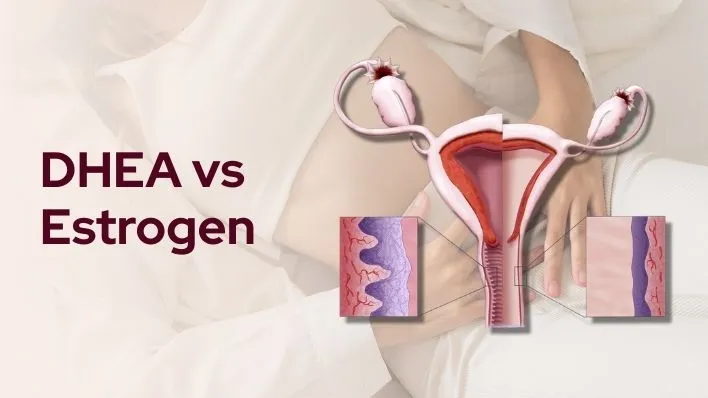
The Intracrine Mechanism of Vaginal DHEA (Intrarosa)
Vaginal DHEA, known by the brand name Intrarosa, contains a substance called prasterone. This is a synthetic but biologically identical version of DHEA, a precursor hormone that is naturally present in your body.
When the Intrarosa pessary is placed in the vagina, the prasterone is absorbed by the vaginal cells. Here’s the key scientific point: it is inactive at this stage.
Inside the cells, specific enzymes convert it into the exact amount of estrogen and androgens (like testosterone) that the tissue needs.
This process is called “intracrinology.” The hormones act locally to restore the tissue and do not significantly increase hormone levels in your bloodstream, which is a major safety advantage.
The Direct Action of Vaginal Estrogen
Vaginal estrogen therapy works more directly. It is available in various forms, such as creams (e.g., Premarin), tablets (e.g., Vagifem), or a soft, flexible ring (e.g., Estring).
These products deliver a low dose of active estrogen directly to the vaginal tissues. The estrogen binds to receptors in the cells, signalling them to function as they did before menopause.
This process improves blood flow, restores moisture, and increases the thickness and elasticity of the vaginal wall. Decades of research confirm its efficacy and safety at these low, local doses.
What Are the Clinical Benefits of Each Treatment?
The Unique Advantages of Vaginal DHEA
The primary benefit of DHEA is its dual-hormone action. By converting to both estrogen and androgens locally, it addresses multiple aspects of vaginal health.
Androgens, for instance, play a role in libido and arousal, so some studies suggest DHEA may offer benefits for sexual function beyond just reducing pain.
Its intracrine mechanism provides psychological reassurance for women who are concerned about “taking estrogen.” This makes it a valuable option at our women’s care clinic in Mumbai for patients seeking a more targeted, cellular-level approach.
The Time-Tested Benefits of Vaginal Estrogen
Vaginal estrogen has been the gold-standard treatment for decades, supported by a vast body of clinical evidence. Its effectiveness, especially for moderate to severe symptoms, is undisputed.
The relief from dryness and pain is often noticeable within a few weeks. Furthermore, the variety of application methods allows for a tailored approach.
Some women prefer the convenience of a long-lasting ring, while others prefer the control of a cream or tablet. Its long history gives us extensive data on long-term safety and efficacy.
Are There Any Risks I Should Be Aware Of?
The Safety Profile of Vaginal DHEA
The risk profile for Intrarosa is very low. Because the conversion to active hormones happens inside the cells, systemic exposure is minimal.
The most common reported side effect is vaginal discharge from the pessary melting—this is not a hormonal effect but rather related to the delivery method.
Though considered safe, its use in women with a history of hormone-sensitive cancers, like breast cancer, should always be discussed with and approved by their oncologist.
The Safety Profile of Vaginal Estrogen
Low-dose vaginal estrogen is also extremely safe and should not be confused with the risks associated with high-dose systemic hormone replacement therapy (HRT).
Systemic absorption is very low. Rarely, some women may experience mild breast tenderness or spotting, which usually resolves.
It is contraindicated in women with undiagnosed vaginal bleeding or a current or past history of certain estrogen-dependent cancers. Regular follow-ups ensure ongoing safety.
Which Treatment is Right for My Body?
Choosing between these two excellent options is a decision we make together, based on a few key factors.
- Your Medical History:
A personal or strong family history of hormone-sensitive cancer would make DHEA a potential first choice, pending oncologist consultation. - Symptom Severity:
For very severe atrophy, the direct and potent action of estrogen might provide faster, more robust relief. - Personal Preference:
Some women prefer a daily application (DHEA), while others prefer a twice-weekly schedule (most estrogens). Your comfort and lifestyle are important. - Specific Goals:
If improving libido and sexual arousal is as important as relieving dryness, the androgenic component of DHEA may be appealing.
The first step is always a proper diagnosis to rule out other causes for your symptoms… if you’re ready to explore your options, I invite you to book a personalised consultation with me, Dr. Jay Mehta, at Ahalya Cosmetic Gynecology.
Frequently Asked Questions (FAQs)
1. Can lifestyle changes like diet or exercise help with vaginal atrophy?
While a healthy lifestyle supports overall well-being, diet and exercise cannot reverse the cellular changes caused by estrogen loss. However, staying well-hydrated, avoiding irritants like harsh soaps, and engaging in regular sexual activity (which promotes blood flow) can complement medical treatments.
2. Is there an age limit for using these vaginal hormone therapies?
No, there is no upper age limit. Genitourinary Syndrome of Menopause is a chronic condition, and these treatments are considered safe for long-term use as long as they are beneficial and you continue with regular gynaecological check-ups. Many women use them for the rest of their lives to maintain comfort.
3. Will my partner be affected by these vaginal treatments?
The amount of hormone transferred to a partner during intercourse is negligible and has not been shown to cause any effects. With DHEA, the conversion happens inside your cells, so there is no active hormone to transfer. With estrogen creams, it’s best to wait about 30-60 minutes after application before intercourse to allow for absorption.
4. What if I am still getting my period but have symptoms of dryness?
This is common during perimenopause, the transition phase before menopause. Your hormone levels can fluctuate wildly, leading to symptoms of dryness even while you are still menstruating. Local vaginal therapies can be used safely during this time to manage symptoms.
5. Can I use these treatments if I have a vaginal prolapse?
Yes, in fact, improving the health and thickness of your vaginal tissues with DHEA or estrogen can be beneficial if you have a mild prolapse. Healthier tissue can provide better support. However, the form of treatment might matter; for example, a pessary or tablet may be easier to use than a ring if you have a significant prolapse. We would assess this during your examination.
Conclusion
After years of practice, I can assure you that you do not have to live with the discomfort of vaginal atrophy. Both Vaginal DHEA and Vaginal Estrogen are scientifically sound, safe, and effective treatments that can restore your quality of life. The “best” choice is not a universal one; it’s a personalised one. It is the treatment that fits your unique health profile, lifestyle, and personal goals. As we have a facility for Vaginal infection treatment in Mumbai, we can first rule out any underlying infections before starting hormonal therapy.
Your comfort and confidence are my priority. I encourage you to take the next step and have a conversation about your symptoms in a safe and supportive environment.
To schedule a confidential appointment and create a treatment plan tailored just for you, please visit us at Ahalya Cosmetic Gynecology clinic in mumbai
Related Blogs

When Vaginal Itching Needs a Doctor’s Visit?
Itching isn’t always an infection. Mumbai’s Dr. Jay Mehta explains the real causes, and when self-treatment isn’t the right approach.
Surgical Treatment for Perineal Endometriosis: Wide Excision Explained
A painful lump that worsens with your period isn’t ordinary scar pain. Mumbai’s Dr. Jay Mehta explains diagnosis and when excision is needed.

Best Gynecologist for Recurrent Genital Infections in Mumbai
Recurring symptoms aren’t always the same infection. Mumbai’s Dr. Jay Mehta explains why, and what actually needs re-evaluating.
Can Perineal Endometriosis Come Back After Surgery?
Yes, but the odds favour most patients. Mumbai’s Dr. Jay Mehta explains what actually drives recurrence, and how to lower your risk.
Does Perineal Endometriosis Always Need Surgery?
No, not always. Mumbai’s Dr. Jay Mehta explains when hormonal therapy can work, and when surgery becomes the better option.
How to Find a Menopause Specialist Who Understands GSM Treatments
Look beyond hot flashes. Mumbai’s Dr. Jay Mehta explains what a good GSM consultation should cover, and the questions worth asking.
Can Vaginal Itching Without Discharge Really Be a Skin Condition?
Vaginal itching without discharge can be caused by skin irritation, dryness, eczema or other conditions. Know the causes, treatment and warning signs.
Why Do Postmenopausal Women Experience Vaginal Itching Without Infection?
Yes, declining estrogen alone can cause itching after menopause. Mumbai’s Dr. Jay Mehta explains why, and what actually helps.
Is Vaginal Itching After Sex Always Due to an Infection?
No, it’s not always an infection. Mumbai’s Dr. Jay Mehta explains how friction, allergies and pH shifts can all cause itching too.
Can Laundry Detergent Cause Chronic Vaginal Itching?
Yes, detergent is an overlooked cause of vaginal itching. Mumbai’s Dr. Jay Mehta explains why it’s mistaken for infection, and the fix.
Book Appointment
