


Is Vaginal Estrogen Safe? A Reassuring Guide for Women
As a gynaecologist, I often speak with women who are silently enduring discomfort from vaginal dryness, itching, or painful intercourse, particularly after menopause.
When I suggest vaginal estrogen as a potential solution, I am frequently met with a look of concern. The word “estrogen” can bring to mind stories about hormone replacement therapy and its associated risks.
It is a valid concern, and one I want to address with clarity and reassurance. For the vast majority of women, low-dose vaginal estrogen is not only a safe treatment but a transformative one, offering significant relief from symptoms that can impact your quality of life.
This guide is designed to answer your questions, ease your worries, and provide a clear, expert perspective on the safety and benefits of vaginal estrogen.

DR JAY MEHTA
Key Takeaways
-
Vaginal estrogen is a low-dose, local treatment, not full-body hormone therapy
-
It has minimal absorption into the bloodstream, making it safe for most women
-
It does not carry the same risks as oral or systemic hormone replacement therapy
-
It effectively treats Genitourinary Syndrome of Menopause (GSM)
-
Relieves vaginal dryness, itching, burning, and painful intercourse
-
Helps reduce urinary symptoms and recurrent UTIs
-
Long-term use is safe for the majority of postmenopausal women
TALK TO US
GET IN TOUCH ON
What is Vaginal Estrogen and Why is it Used?
Let’s start by clarifying what this treatment is and how it helps. Many women find these conversations sensitive, but understanding your body is the first step towards empowerment and better health.
⇒ Understanding vaginal estrogen and its role in women’s health
Vaginal estrogen is a localised hormone therapy designed to restore the health of vaginal and urinary tissues. After menopause, the body’s natural estrogen levels decline significantly.
This hormone is crucial for maintaining the thickness, elasticity, and lubrication of the vaginal walls. Without it, the tissues can become thin, dry, and fragile—a condition known as vulvovaginal atrophy or, more broadly, Genitourinary Syndrome of Menopause (GSM).
Vaginal estrogen therapy replenishes the hormone directly where it is needed, helping to reverse these changes and restore comfort.
⇒ Common conditions treated with vaginal estrogen
This treatment is highly effective for a range of GSM symptoms. Women seek this therapy to find relief from:
- Vaginal dryness, burning, and itching
- Pain during sexual intercourse (dyspareunia)
- Urinary urgency, frequency, and recurrent urinary tract infections (UTIs)
- General discomfort in the intimate area
By addressing the root cause of these issues—localised estrogen deficiency—this treatment can dramatically improve daily comfort and intimacy.
⇒ How vaginal estrogen differs from systemic hormone therapy
This is perhaps the most critical point of confusion. Systemic hormone therapy, which comes in the form of pills, patches, or gels applied to the general skin, circulates estrogen throughout the entire body.
It is used to manage systemic menopausal symptoms like hot flushes and night sweats. Because it affects all tissues, including the breast and uterus, it carries a different risk profile.
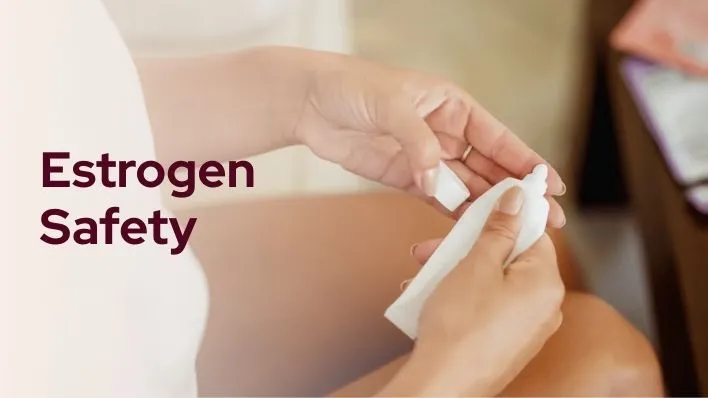
In contrast, vaginal estrogen is a low-dose, local treatment. It is applied directly to the vagina as a cream, tablet, or ring.
The amount of estrogen absorbed into the bloodstream is minimal, and its effects are almost entirely confined to the vaginal and lower urinary tract tissues. This localised approach is key to its excellent safety profile.
Is Vaginal Estrogen Safe for All Women?
Safety is the foremost concern for any medical treatment. My priority as your doctor is to ensure you feel confident and informed about your care choices.
⇒ Clinical safety profile of vaginal estrogen
Extensive research and clinical practice have consistently shown that low-dose vaginal estrogen is safe for long-term use in most postmenopausal women.
Major studies, including the Women’s Health Initiative (WHI), have found no increased risk of cardiovascular events, stroke, or cancer among users of vaginal estrogen.
The minimal systemic absorption means it does not carry the same risks associated with oral hormone therapy.
The primary goal is to restore local tissue health, not to raise hormone levels throughout your body.
⇒ Considerations for breast cancer survivors
The conversation around vaginal estrogen becomes more nuanced for breast cancer survivors, especially those with hormone-receptor-positive cancers.
The concern is whether even a tiny amount of absorbed estrogen could pose a risk.
However, a growing body of evidence and consensus among experts suggests that for many survivors suffering from severe GSM, the benefits of vaginal estrogen can outweigh the theoretical risks.
This decision is always made on a case-by-case basis, in close collaboration with the patient’s oncologist.
As a Gynec Surgeon in Mumbai, I work with your entire medical team to ensure a safe and coordinated approach.
⇒ Addressing common misconceptions and fears
The “black box” warning on vaginal estrogen products is a common source of anxiety. This warning was mandated based on the risks of systemic hormone therapy.
However, numerous medical societies, including The North American Menopause Society, have argued that this label is misleading for low-dose vaginal preparations and causes unnecessary fear.
It is essential to understand that local therapy is fundamentally different from systemic therapy.
What to Expect During Treatment with Vaginal Estrogen?
If you decide this treatment is right for you, the process is straightforward and supportive.
⇒ Consultation and evaluation process
Your journey will begin with a thorough consultation. We will discuss your symptoms, medical history, and any concerns you may have.
A pelvic examination helps me assess the health of your vaginal tissues and confirm if GSM is the cause of your discomfort.
This is a confidential and non-judgmental space for you to share your experiences openly.
⇒ Types of vaginal estrogen and their application methods
There are several ways to use vaginal estrogen, allowing us to choose the one that best suits your lifestyle and preference:
- Creams: Applied with an applicator, typically at bedtime. Dosing is often daily for the first few weeks, then reduced to twice a week.
- Vaginal Tablets/Inserts: Small, dissolvable tablets placed into the vagina with a disposable applicator.
- Vaginal Ring: A soft, flexible ring that you or your doctor inserts into the vagina. It slowly releases estrogen over 90 days and is then replaced.
⇒ Monitoring and follow-up care
Once you start treatment, we will schedule follow-up appointments to monitor your progress and ensure the therapy is working effectively.
Most women experience significant symptom relief within a few weeks. Regular check-ins allow us to make any necessary adjustments and confirm you are comfortable with your treatment plan.
Are There Risks or Side Effects Associated with Vaginal Estrogen?
Like any medication, vaginal estrogen has potential side effects, although they are generally mild and manageable.
⇒ Potential side effects and how to manage them
The most common side effects are localised and often decrease as your body adjusts. These may include mild vaginal discharge, breast tenderness, or light spotting.
These symptoms are usually temporary. If they persist, a simple adjustment in dose or application method can often resolve the issue.
⇒ Long-term safety considerations
Decades of data support the long-term safety of low-dose vaginal estrogen. There is no evidence suggesting an increased risk of endometrial cancer when used as prescribed.
For women with a uterus, routine use of a progestin (as is required with systemic estrogen) is not necessary with this local therapy. Any unexpected vaginal bleeding should always be promptly evaluated by your doctor.
How Can Vaginal Estrogen Improve Quality of Life?
The impact of this treatment extends far beyond simply alleviating physical symptoms.
⇒ Relief from symptoms of genitourinary syndrome of menopause
The primary benefit is direct relief. The burning, itching, and dryness subside. Urinary symptoms like urgency and recurrent infections can decrease.
This restores a sense of physical normalcy and comfort that many women thought was lost for good.
⇒ Emotional and physical well-being benefits
Painful intercourse can strain relationships and negatively affect self-esteem. By restoring vaginal health, this treatment can help you reclaim intimacy and feel more confident and connected with your partner.
The end of chronic discomfort also has a profound positive effect on mood and overall well-being.
This is a key aspect of my practice as a Cosmetic Gynecologist in Mumbai, focusing on holistic well-being.
⇒ Testimonials and real-life experiences
Many of my patients in Mumbai have described this treatment as “life-changing.” One woman shared that after years of avoiding intimacy due to pain, she was finally able to reconnect with her husband.
Another expressed her relief at no longer suffering from constant urinary discomfort. These stories highlight the powerful impact of addressing GSM.
What Are the Alternatives to Vaginal Estrogen?
For women who cannot or prefer not to use hormone-based treatments, there are other options available.
⇒ Non-hormonal treatments and their effectiveness
Non-hormonal options include over-the-counter vaginal moisturisers (used regularly) and lubricants (used during intercourse). These products can provide temporary relief from dryness but do not reverse the underlying tissue atrophy.
Other advanced treatments, such as laser therapy, are also available and can be discussed as part of a comprehensive care plan.
The field of Female Intimate Surgery in Mumbai offers innovative, non-hormonal solutions for vaginal rejuvenation.
⇒ Lifestyle changes to support vaginal health
Staying hydrated, avoiding irritants in soaps and detergents, and engaging in regular sexual activity (with or without a partner) can help maintain blood flow and elasticity in the vaginal tissues. However, for moderate to severe GSM, lifestyle changes alone may not be sufficient.
⇒ When to consider alternative therapies
Alternative therapies are an excellent first step for mild symptoms. They are also the primary choice for women with specific medical contraindications to estrogen.
We can explore all available options together to find the best fit for your unique needs.
Frequently Asked Questions (FAQs)
1. How long do I need to use vaginal estrogen?
Genitourinary Syndrome of Menopause (GSM) is a chronic condition, meaning symptoms will likely return if treatment is stopped. Vaginal estrogen can be used safely for as long as you need it to manage symptoms. We will review your treatment plan during your annual check-ups to ensure it remains the best option for you.
2. Will using vaginal estrogen cause me to gain weight?
Weight gain is not a common side effect of low-dose, localised vaginal estrogen. The dose is very low and does not have the systemic effects associated with oral hormone therapy, which can sometimes be linked to changes in weight or fluid retention.
3. Can I use vaginal estrogen if I have a history of blood clots?
A history of blood clots (deep vein thrombosis or pulmonary embolism) is a serious medical consideration. While systemic estrogen is known to increase clot risk, the risk with low-dose vaginal estrogen is considered negligible because so little is absorbed into the bloodstream. However, this is a critical discussion to have with your doctor, who will evaluate your personal health history before recommending treatment.
4. Is it messy to use vaginal estrogen creams or tablets?
Most women find the application process simple and not overly messy. Creams and tablets are typically used at bedtime, which minimises leakage. Wearing a panty liner can help manage any minor discharge. The vaginal ring is an even less messy option, as it stays in place for three months.
5. At what age can I start using vaginal estrogen?
Vaginal estrogen is typically prescribed for postmenopausal women who are experiencing symptoms of GSM. However, estrogen deficiency and related symptoms can also occur in younger women due to surgical menopause (removal of ovaries), certain medical treatments like chemotherapy, or conditions like primary ovarian insufficiency. Treatment is based on symptoms and medical need, not age alone.
Conclusion: Your Path to Lasting Intimate Health
Making an informed decision about your health is your right. I hope this guide has helped demystify vaginal estrogen and provided the reassurance you need.
As Dr. Jay Mehta, Chief Gynec Surgeon at Ahalya, my clinical experience has shown me time and again that low-dose vaginal estrogen is a safe, effective, and profoundly beneficial treatment for the vast majority of women suffering from GSM. You do not have to accept discomfort as a normal part of ageing.
Your symptoms are real, and effective solutions exist. Taking the step to discuss your intimate health concerns with a trusted professional is an act of self-care. It opens the door to relief and a better quality of life.
Book your consultation today and take the first step towards reclaiming your comfort and confidence.
Related Blogs

When Vaginal Itching Needs a Doctor’s Visit?
Itching isn’t always an infection. Mumbai’s Dr. Jay Mehta explains the real causes, and when self-treatment isn’t the right approach.
Surgical Treatment for Perineal Endometriosis: Wide Excision Explained
A painful lump that worsens with your period isn’t ordinary scar pain. Mumbai’s Dr. Jay Mehta explains diagnosis and when excision is needed.

Best Gynecologist for Recurrent Genital Infections in Mumbai
Recurring symptoms aren’t always the same infection. Mumbai’s Dr. Jay Mehta explains why, and what actually needs re-evaluating.
Can Perineal Endometriosis Come Back After Surgery?
Yes, but the odds favour most patients. Mumbai’s Dr. Jay Mehta explains what actually drives recurrence, and how to lower your risk.
Does Perineal Endometriosis Always Need Surgery?
No, not always. Mumbai’s Dr. Jay Mehta explains when hormonal therapy can work, and when surgery becomes the better option.
How to Find a Menopause Specialist Who Understands GSM Treatments
Look beyond hot flashes. Mumbai’s Dr. Jay Mehta explains what a good GSM consultation should cover, and the questions worth asking.
Can Vaginal Itching Without Discharge Really Be a Skin Condition?
Vaginal itching without discharge can be caused by skin irritation, dryness, eczema or other conditions. Know the causes, treatment and warning signs.
Why Do Postmenopausal Women Experience Vaginal Itching Without Infection?
Yes, declining estrogen alone can cause itching after menopause. Mumbai’s Dr. Jay Mehta explains why, and what actually helps.
Is Vaginal Itching After Sex Always Due to an Infection?
No, it’s not always an infection. Mumbai’s Dr. Jay Mehta explains how friction, allergies and pH shifts can all cause itching too.
Can Laundry Detergent Cause Chronic Vaginal Itching?
Yes, detergent is an overlooked cause of vaginal itching. Mumbai’s Dr. Jay Mehta explains why it’s mistaken for infection, and the fix.
Book Appointment
