


Can Vaginismus Be Treated Without Vaginal Dilators?
For many women, reading the words “vaginal dilators” is enough to close the browser tab. The idea of inserting anything even as part of treatment feels impossible when the whole problem is that penetration is painful or terrifying.
The good news: dilators are not the only path to recovery. Vaginismus can be treated through multiple clinical approaches, and for many patients, other methods work just as effectively or even better.
If you are exploring vaginismus treatment without dilators in Mumbai and need a clear, honest answer, this article gives you one. Dr. Jay Mehta at Ahalya Cosmetic Gynaecology takes an individualised approach because not every patient needs the same plan.
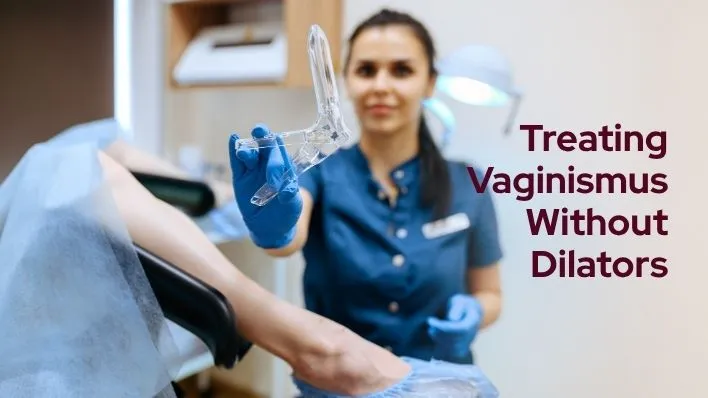

DR JAY MEHTA
Key Takeaways:
- Vaginal dilators are one treatment option not the only one, and not mandatory
- Pelvic floor therapy, CBT, Botox, and psychosexual therapy all show high success rates independently
- A 2026 PubMed meta-analysis found combined therapy achieves 86% success without dilators being required
- Botox injections achieved 85% pain-free intercourse in a 2025 randomised controlled trial
- The right treatment depends on your specific triggers, severity, and comfort not a one-size approach
Is It Actually Possible to Treat Vaginismus Without Dilators?
Yes and there is strong clinical evidence to support it.
Vaginal dilators have been part of vaginismus treatment protocols since the 1970s, largely based on behavioural exposure principles from Masters and Johnson. They became standard partly because they were available, teachable, and measurable. But being common does not mean being essential.
If you are still building a foundational understanding of the condition, our overview of vaginismus causes, symptoms, and treatment covers the full clinical picture before this article gets into why dilators specifically are not the only route to recovery.
- What the Evidence Actually Shows
A 2026 systematic review and meta-analysis published in PubMed covering 863 patients across 18 studies directly compared treatment approaches for vaginismus. The results were clear:
Combined psychosexual interventions: 86% success rate. CBT alone: 82%. Botulinum toxin (Botox): 85%. Pelvic floor physiotherapy: 85%. Vaginal dilator therapy: 78%.
Dilator therapy had the lowest individual success rate of all approaches studied. This does not mean dilators are ineffective it means other treatments are not inferior substitutes. They are legitimate, evidence-based alternatives that, in some cases, outperform dilator-only protocols.
- Why Dilators Became Default
Dilators are inexpensive, usable at home, and require no specialist input once explained. For healthcare systems with limited psychosexual resources, they became a convenient first-line recommendation. But convenience is not the same as clinical superiority and patients who resist dilators are not failing treatment. They may simply need a different one.
TALK TO US
GET IN TOUCH ON
What Is Vaginismus and Why Does Treatment Need to Be Personalised?
Vaginismus is an involuntary contraction of the pelvic floor muscles during attempted penetration and its triggers vary significantly between patients.
- The Reflex That Cannot Be Overridden by Will
The muscle spasm in vaginismus is driven by a protective reflex arc in the nervous system. It fires before conscious thought intervenes. This means the treatment must target the reflex pathway not just the muscle outcome. Dilators address the physical pathway. They are not designed to address the fear-pain cycle, trauma history, or neurological overactivation that may be driving the reflex.
- Physical vs Psychological Triggers Change the Equation
When vaginismus is primarily driven by physical factors hormonal changes, childbirth injury, infection the physical treatment pathway (pelvic floor therapy, Botox, dilators) tends to be most effective. When it is driven by anxiety, trauma, or cultural conditioning, cognitive behavioural therapy or psychosexual therapy may produce better outcomes faster.
- No Single Gold Standard Exists
The scientific literature explicitly states there is no single gold-standard treatment for vaginismus. This is important for patients to understand: the best treatment is the one matched to your specific presentation, not the one most commonly prescribed.
What Non-Dilator Treatments Actually Work?
Four approaches have strong clinical evidence and none requires dilator use.
- Pelvic Floor Physiotherapy
A trained pelvic physiotherapist works directly with the muscles involved in vaginismus teaching them to release, relax, and respond differently using manual therapy, biofeedback equipment, and targeted breathing techniques.
The 2026 meta-analysis reported an 85% success rate for this approach. Sessions are non-invasive and completely controlled by the patient.
Techniques commonly used include trigger point release, neuromuscular re-education, diaphragmatic breathing exercises, and progressive muscle relaxation. None of these require penetration during early treatment.
- Cognitive Behavioural Therapy (CBT)
CBT targets the fear-pain cycle directly. A trained therapist identifies the specific thoughts and beliefs that activate the protective reflex fear of pain, fear of injury, shame, anticipatory anxiety and systematically replaces them with accurate, calming reframes. The meta-analysis found an 82% success rate for CBT as a standalone intervention.
CBT for vaginismus does not require the patient to do anything physically uncomfortable. It is conducted in conversation, at a pace entirely controlled by the patient.
- Psychosexual Therapy and Couples Counselling
When relationship dynamics, communication breakdown, or intimacy anxiety are contributing factors, psychosexual therapy addresses the relational dimension of vaginismus.
The same meta-analysis found combined psychosexual interventions produced the highest success rate of any approach studied 86% precisely because they address both the emotional and physical dimensions simultaneously.
- Biofeedback
Biofeedback uses sensor technology to give patients real-time information about their pelvic floor muscle tension. Patients can see on a screen exactly when their muscles are tensing and learn to release that tension voluntarily.
Studies have reported success rates of up to 100% in some controlled settings. It requires no penetration and gives patients a measurable, visual experience of their own muscle control.
When Is Botox Used And How Effective Is It?
Botox injections for vaginismus work by temporarily relaxing the involuntary muscle contractions that prevent penetration and the results are significant.
- What Botox Actually Does
Botulinum toxin (Botox) is injected into the pelvic floor muscles that are contracting involuntarily. It temporarily reduces the muscles’ ability to spasm by blocking the nerve signals driving the contraction. This gives the body a physiological window to retrain its reflex response without forcing penetration through pain.
- The 2025 Randomised Controlled Trial
A 2025 prospective RCT published in ScienceDirect directly compared Botox injections against standard therapy (dilators, pelvic floor physiotherapy, CBT) in 160 women with severe vaginismus.
Results at six months: 85% of the Botox group achieved pain-free intercourse, compared to 40% in the standard therapy group. Pain scores dropped 66% in the Botox group within four weeks.
- Who It Is Suitable For
Botox is most appropriate for moderate-to-severe vaginismus (Lamont Grade 3–4) that has not responded adequately to other approaches.
It is performed under sedation, takes approximately 20 minutes, and is typically followed by a course of pelvic floor muscle relaxation exercises or physiotherapy to consolidate the results.
It is not a first-line treatment for mild cases, but for patients who have struggled, it can be genuinely transformative.
Why Do Some Women Refuse Dilators And Is That a Valid Response?
Yes. Dilator resistance is clinically recognised and forcing a patient toward them is counterproductive.
- The Emotional Reality
For women whose vaginismus is driven by trauma, fear, or deep anxiety about penetration, introducing a dilator prematurely can reinforce the very reflex it is meant to resolve. The brain does not distinguish between therapeutic and non-therapeutic penetration in the early stages of treatment. Pain or panic during dilator use deepens the fear-pain cycle rather than breaking it.
- When Dilators Make Things Worse
A qualitative study published in the National Library of Medicine documented women’s experiences with dilator therapy. Several reported that the pressure to use dilators combined with distress during attempts increased anxiety and reduced confidence in their own recovery. Pushing through distress is not the same as progressing in treatment.
- The Cultural Dimension
In India, where sexual health conversations carry significant social weight, asking a woman to insert anything into her vagina as a solo home exercise carries complex emotional freight. A specialist who acknowledges this reality and offers alternatives will achieve better outcomes than one who simply hands over dilators and sends the patient home.
Does Recovery Without Dilators Take Longer?
Not necessarily especially when the right alternative is matched to the right patient.
Severity matters most. Mild vaginismus often responds quickly to CBT or pelvic floor physiotherapy alone.
Moderate-to-severe cases may benefit from Botox to create rapid physical progress, followed by pelvic therapy to sustain it.
The 2026 meta-analysis found no significant difference in overall outcomes between dilator-inclusive and non-dilator approaches when treatment was properly matched to the patient.
Timeline differences were small and largely dependent on consistency of engagement, not the presence or absence of dilators.
How Do You Know Which Treatment Path Is Right for You?
The answer begins with an assessment not a default prescription.
- Assessment First, Prescription Second
A proper evaluation covers severity grade, physical contributors, psychological history, relationship context, and patient preferences.
This is especially relevant for women who are also navigating pregnancy alongside vaginismus, since treatment timing, dilator use, and Botox eligibility all need to be reassessed in that context.
This takes time. It requires a specialist who understands that vaginismus is not one condition with one solution it is a reflex disorder with multiple possible origins and an equally varied treatment landscape.
- Why Self-Treating Rarely Works
Home exercises, breathing videos, and online dilator guides are not treatment plans. They may help mildly in certain cases, but vaginismus treatment without surgery whether that means physiotherapy, CBT, or Botox works best with professional guidance, monitoring, and adjustment over time. Accessing a specialist is not a last resort. It is the fastest path to recovery.
Final Thoughts
Vaginal dilators are a tool a useful one for some patients, a counterproductive one for others. The evidence is clear that multiple approaches work, several at higher success rates than dilators alone.
CBT, pelvic floor physiotherapy, psychosexual therapy, biofeedback, and Botox are all legitimate, evidence-backed paths to recovery. The 2026 PubMed meta-analysis confirms this with data from 863 patients. The 2025 RCT confirms Botox achieves results that standard therapy alone does not match in severe cases.
What matters is not whether dilators are used it is whether the treatment matches the patient. Recovery is possible for every woman with vaginismus. The path just needs to be the right one for her.
Frequently Asked Questions (FAQs)
1. How long does vaginismus treatment take without dilators?
Timeline varies depending on severity and which treatment is used. Pelvic floor physiotherapy and CBT typically show meaningful improvement within three to six months. Botox can produce significant pain reduction within four weeks, with full results assessed at six months. Mild cases often resolve faster; severe cases benefit most from specialist-guided, combined approaches.
2. Can I do vaginismus exercises at home without seeing a specialist?
Some breathing, relaxation, and pelvic floor awareness exercises can be practiced at home but they are most effective as part of a supervised treatment plan. Without professional guidance, it is difficult to know whether you are targeting the right muscles, using correct technique, or progressing appropriately. Home exercises support clinical treatment; they rarely replace it.
3. Is Botox for vaginismus safe?
Yes, when performed by a qualified specialist. Botox injections for vaginismus are administered under sedation into specific pelvic floor muscles. The procedure takes approximately 20 minutes. Side effects are generally mild and temporary. A 2025 randomised controlled trial involving 80 patients found it both safe and significantly more effective than standard therapy for severe cases.
4. Can vaginismus be cured with therapy alone without any physical treatment at all?
Yes, in some cases. For women whose vaginismus is primarily driven by anxiety, fear, or psychological history, CBT and psychosexual therapy can achieve full resolution without any physical intervention. The 2026 meta-analysis found CBT alone achieves an 82% success rate. However, if physical factors are contributing, adding a physical component produces better results.
5.Does vaginismus always come back after treatment?
Not necessarily, but risk of recurrence exists if the underlying triggers whether physical or psychological are not fully addressed. Women who receive thorough, multidimensional treatment are less likely to relapse. Continuing pelvic awareness exercises and maintaining open communication with a partner after treatment both support long-term recovery. Follow-up with a specialist is advisable if symptoms return.
Related Blogs

When Vaginal Itching Needs a Doctor’s Visit?
Itching isn’t always an infection. Mumbai’s Dr. Jay Mehta explains the real causes, and when self-treatment isn’t the right approach.

Surgical Treatment for Perineal Endometriosis: Wide Excision Explained
A painful lump that worsens with your period isn’t ordinary scar pain. Mumbai’s Dr. Jay Mehta explains diagnosis and when excision is needed.

Best Gynecologist for Recurrent Genital Infections in Mumbai
Recurring symptoms aren’t always the same infection. Mumbai’s Dr. Jay Mehta explains why, and what actually needs re-evaluating.

Can Perineal Endometriosis Come Back After Surgery?
Yes, but the odds favour most patients. Mumbai’s Dr. Jay Mehta explains what actually drives recurrence, and how to lower your risk.

Does Perineal Endometriosis Always Need Surgery?
No, not always. Mumbai’s Dr. Jay Mehta explains when hormonal therapy can work, and when surgery becomes the better option.
How to Find a Menopause Specialist Who Understands GSM Treatments
Look beyond hot flashes. Mumbai’s Dr. Jay Mehta explains what a good GSM consultation should cover, and the questions worth asking.

Can Vaginal Itching Without Discharge Really Be a Skin Condition?
Vaginal itching without discharge can be caused by skin irritation, dryness, eczema or other conditions. Know the causes, treatment and warning signs.

Why Do Postmenopausal Women Experience Vaginal Itching Without Infection?
Yes, declining estrogen alone can cause itching after menopause. Mumbai’s Dr. Jay Mehta explains why, and what actually helps.

Is Vaginal Itching After Sex Always Due to an Infection?
No, it’s not always an infection. Mumbai’s Dr. Jay Mehta explains how friction, allergies and pH shifts can all cause itching too.
Can Laundry Detergent Cause Chronic Vaginal Itching?
Yes, detergent is an overlooked cause of vaginal itching. Mumbai’s Dr. Jay Mehta explains why it’s mistaken for infection, and the fix.
Book Appointment
