


Can Pelvic Floor Exercises Really Improve Vaginal Laxity?
If you’ve been told to “just do your Kegels” for vaginal looseness, you’ve probably wondered whether that’s genuinely enough or just something people say to avoid a longer conversation.
At Ahalya Cosmetic Gynecology in Mumbai, this is one of the most practical questions we get from women considering vaginal tightening treatment in Mumbai, and Dr. Jay Mehta, Gynec Surgeon, gives patients a clear, honest answer: pelvic floor exercises genuinely help — but only for a specific part of the problem, and only when done correctly.
Understanding exactly what they can and can’t do will save you months of guesswork.

DR JAY MEHTA
Key Takeaways:
- Pelvic floor exercises strengthen muscle, but vaginal laxity often also involves loss of tissue elasticity — these are two different things
- Most women perform Kegel exercises incorrectly without ever realising it
- Correctly guided pelvic floor therapy can meaningfully improve muscle tone within 8–12 weeks
- Exercise alone usually cannot fully reverse moderate-to-severe tissue laxity
- Combining pelvic floor therapy with medical treatment often gives the best outcome
What Exactly Is Vaginal Laxity and Where Do Pelvic Floor Muscles Fit In?
To answer whether exercise helps, we first need to separate two things that often get lumped together.
- Vaginal laxity has two contributing components: muscular and tissue-based. The muscular part involves the pelvic floor — a hammock-like group of muscles supporting the bladder, uterus, and rectum. The tissue-based part involves the elasticity of the vaginal walls themselves, driven by collagen and elastin.
- Pelvic floor exercises target only the muscular component. They cannot rebuild collagen in the vaginal lining — that requires either time, hormone changes, or a specific medical treatment.
- This distinction is supported by the US National Institute of Child Health and Human Development (NICHD), which confirms that while pelvic floor muscle training may improve symptoms of incontinence and prolapse, it cannot correct prolapse — underscoring that exercise addresses muscle tone, not structural tissue change.
- This is why some women see great improvement from exercise, while others feel little change — it often comes down to how much of their looseness is muscular versus tissue-related.
TALK TO US
GET IN TOUCH ON
Why Do Pelvic Floor Muscles Weaken After Childbirth or Age?
Knowing the cause helps you understand why consistent, correct exercise actually works on this part of the issue.
- Vaginal delivery stretches and can partially injure pelvic floor muscles and their nerve supply, reducing their natural tone temporarily or, in some cases, longer term.
- Pregnancy itself — even before delivery — places sustained pressure on these muscles for nine months, contributing to weakening regardless of delivery method.
- Ageing and menopause reduce muscle mass and hormone support generally, which affects pelvic floor strength the same way it affects muscles elsewhere in the body.
- A sedentary lifestyle or chronic straining (from constipation or chronic coughing, for example) further weakens this muscle group over time.
How Severe Does Laxity Need to Be Before Exercise Alone Isn’t Enough?
This is the honest ceiling most articles skip over.
- Mild-to-moderate laxity, especially when it’s primarily muscular, tends to respond well to a structured pelvic floor programme.
- More significant tissue laxity — often seen after multiple vaginal deliveries, larger babies, or age-related collagen loss — usually needs more than exercise to see a meaningful difference in tightness.
- A simple guide: if you notice mild reduction in sensation or a general “not as snug” feeling, exercise is a strong first step. If there’s a more pronounced sense of looseness, visible tissue laxity, or associated symptoms like mild urinary leakage, it’s worth a clinical assessment.
For women unsure whether conservative management is sufficient or whether non-surgical or surgical tightening is a better fit, our guide on the difference between vaginal tightening and vaginoplasty maps out exactly which option suits which severity level.
How Do We Confirm You’re Doing Pelvic Floor Exercises Correctly?
Here’s the part almost nobody tells you: most people doing Kegels on their own are engaging the wrong muscles, which is why results often disappoint.
- A clinical pelvic floor assessment identifies whether you’re actually contracting the right muscle group, rather than your abdominal, thigh, or buttock muscles instead — a very common mistake.
- Biofeedback devices measure muscle activity in real time, giving visual or audio confirmation that you’re engaging correctly — this alone dramatically improves results for many patients.
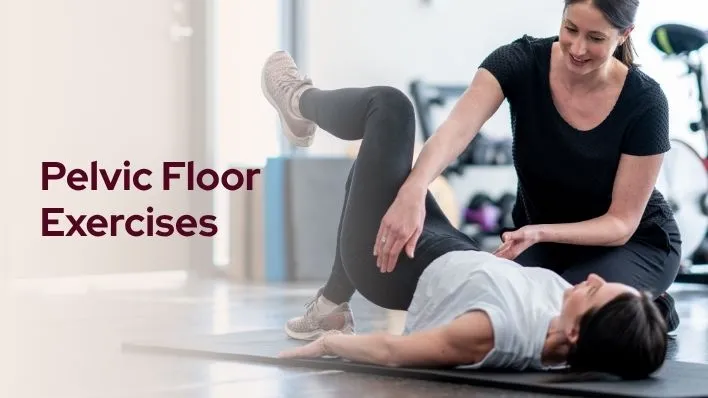
- A pelvic floor physiotherapist can guide technique, frequency, and progression, which matters far more than simply “doing more” repetitions.
What Do Effective Pelvic Floor Exercises Actually Involve?
Real pelvic floor training goes well beyond the basic squeeze-and-release most people picture.
- Correct isolation of the pelvic floor muscles, distinct from surrounding muscle groups, forms the foundation of any effective programme.
- A mix of quick contractions and longer sustained holds builds both fast-response strength (useful for coughing or sudden movement) and endurance strength (useful for general support).
- Progressive difficulty, such as adding resistance or combining exercises with functional movements, helps continue building strength once basic contractions become easy.
- Consistency over weeks, not days, is what produces real change; This is a gradual retraining process, not an overnight fix.
If you’ve tried Kegels on your own without much success, Dr. Jay Mehta at Ahalya Cosmetic Gynecology, Mumbai, can assess whether technique, severity, or a tissue-level factor is behind it, and build a realistic plan from there.
What Results Can You Realistically Expect, and By When?
Setting the right expectations prevents both giving up too early and expecting what exactly vaginal laxity and where pelvic floor muscles fit in. oo much.
- Initial improvements in muscle tone are often noticeable within 6–8 weeks of consistent, correctly performed exercise.
- More significant change typically builds over 3–6 months, particularly for women rebuilding strength after childbirth.
- Exercise will not reverse tissue-level looseness on its own — if that’s the primary driver of your symptoms, expect a plateau regardless of how consistent you are, which is a sign to explore additional options rather than a personal failure.
How Does Improved Pelvic Floor Strength Affect Confidence and Intimacy?
The benefits here go beyond just the physical.
- Stronger pelvic floor muscles are directly linked to improved sensation during intercourse for many women, since these muscles play an active role during arousal and intimacy.
- Better pelvic floor function also reduces mild stress urinary incontinence — the small leaks some women notice when coughing, sneezing, or exercising.
- Feeling more in control of your body postpartum often has a meaningful effect on overall confidence, separate from the physical changes alone.
What If Exercises Aren’t Enough — What Comes Next?
If you’ve genuinely put in consistent, correctly guided effort and still aren’t seeing the change you want, there’s no reason to feel stuck.
- Non-surgical radiofrequency-based vaginal tightening addresses the tissue-elasticity side that exercise can’t reach and pairs well with continued pelvic floor work.
If prolapse is also part of the picture — which it sometimes is alongside laxity — our article on how to fix a prolapse without surgery outlines the full range of conservative approaches, from guided physiotherapy to pessary support, and when surgical referral is appropriate.
- Surgical vaginoplasty may be appropriate for more significant tissue laxity, offering a more definitive, longer-lasting result.
- The best outcomes often come from combining approaches — strong pelvic floor muscles alongside restored tissue elasticity — rather than relying on just one.
Final Thoughts
Pelvic floor exercises are genuinely effective — but for a specific piece of the puzzle: muscle strength, not tissue elasticity.
Done correctly and consistently, they can meaningfully improve tone, sensation, and confidence, especially for mild-to-moderate concerns.
When they aren’t enough on their own, that’s simply useful information pointing toward a more complete treatment plan, not a sign that nothing will work for you.
Frequently Asked Questions (FAQs)
1. Can I do pelvic floor exercises while still recovering right after delivery?
Gentle pelvic floor engagement can often begin within the first few weeks postpartum, but timing depends on your delivery type and any tearing or stitches, so it’s best confirmed with your doctor first.
2. Do pelvic floor exercises help with bladder control too?
Yes, strengthening these same muscles is one of the most effective non-surgical approaches for mild stress urinary incontinence, which frequently occurs alongside vaginal laxity.
3. Is it possible to overdo pelvic floor exercises?
Yes, excessive or incorrect repetitions can cause muscle fatigue or tension rather than improvement, which is why guided technique matters more than sheer volume.
4. Do vaginal cones or weighted devices actually help?
They can be a useful tool to add resistance once basic technique is confirmed correct, though they shouldn’t replace a proper assessment of your pelvic floor first.
5. Will pelvic floor exercises help after menopause too?
Yes, though results may build more slowly due to lower oestrogen levels, and combining exercise with topical or medical support is often more effective at this stage.
Related Blogs

When Vaginal Itching Needs a Doctor’s Visit?
Itching isn’t always an infection. Mumbai’s Dr. Jay Mehta explains the real causes, and when self-treatment isn’t the right approach.

Surgical Treatment for Perineal Endometriosis: Wide Excision Explained
A painful lump that worsens with your period isn’t ordinary scar pain. Mumbai’s Dr. Jay Mehta explains diagnosis and when excision is needed.
Book Appointment
