


Can Laundry Detergent Cause Chronic Vaginal Itching?
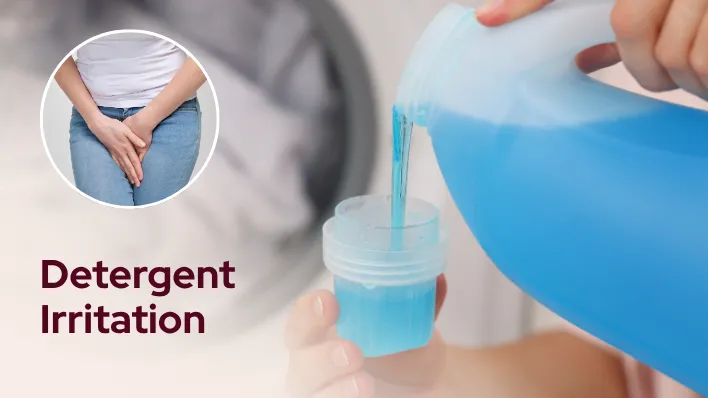
Yes, laundry detergent is one of the most overlooked causes of ongoing vaginal itching, and I see it far more often in practice than most patients expect.
I’m Dr. Jay Mehta, chief gynecologist at Ahalya Cosmetic Gynecology Clinic, and when patients come to me after months of trying every yeast infection cream on the shelf with no lasting relief, the underwear drawer is sometimes exactly where the answer is hiding.
If you’re looking for chronic vaginal itching treatment in Mumbai and nothing seems to be working, this is worth reading before you try another antifungal cream.

DR JAY MEHTA
Key Takeaways
- Detergent residue can trigger vulvar irritation without a single infection being involved
- The reaction can appear days after washing, not immediately, which makes it easy to miss
- It’s often mistaken for recurring yeast infections or bacterial vaginosis
- Switching detergents alone resolves symptoms for many patients
- Persistent cases still need a proper exam to confirm the cause
Can Laundry Detergent Really Cause Chronic Vaginal Itching?
Yes, and this happens through a skin reaction, not an infection, which is exactly why treating it like an infection usually doesn’t work.
- The vulvar skin is thinner and more sensitive than skin elsewhere on the body, which makes it more reactive to chemical residue left on fabric.
- Underwear sits directly against this sensitive skin for hours at a time, giving any leftover detergent residue prolonged contact.
- This is a well-documented cause of what’s called contact dermatitis, and detergent is one of the most common triggers dermatology literature points to for this specific area.
TALK TO US
GET IN TOUCH ON
What’s Actually Happening on the Skin When This Occurs?
Detergent can irritate the skin in two different ways, and the distinction actually matters for how we treat it.
- Irritant contact dermatitis happens when a harsh chemical simply damages the skin’s surface, regardless of whether you’re allergic to it. Anyone exposed long enough can develop this.
- Allergic contact dermatitis is different. It happens when your immune system specifically reacts to an ingredient, usually a fragrance or enzyme, and it can develop even with a product you’ve used for years without issue.
- Both damage the skin barrier, the protective outer layer that normally keeps irritants out and moisture in, which is what leads to the itching, dryness, and sometimes burning.
- The U.S. National Library of Medicine’s MedlinePlus entry on contact dermatitis breaks down this irritant-versus-allergic distinction in more detail, and specifically lists detergents and fabric softeners among the common triggers.
How Do I Know If Detergent Is the Real Cause?
The clearest clue is timing that doesn’t match a typical infection, along with itching that shows up specifically where underwear or towels have contact.
- Unlike an infection, which usually comes with discharge, odor, or a distinct pattern, detergent-related itching often occurs with dry, slightly reddened skin and no discharge at all.
- The reaction can be delayed by one to several days after washing, so most people never connect a new detergent brand to symptoms that appear later in the week.
- If itching improves noticeably during travel or after using a different laundry service, that’s a strong clue pointing toward detergent rather than an infection.
Why Does This Often Get Misdiagnosed as an Infection?
Because the main symptom, itching, overlaps heavily with yeast infections and bacterial vaginosis, patients and even initial self-treatment often assume it’s an infection by default.
I’ve written separately about how to tell a yeast infection apart from other causes, and the same overlap in symptoms that makes that distinction tricky is exactly what makes detergent-related irritation so easy to misread as recurring thrush.
- Repeated rounds of antifungal cream with no real improvement is actually one of the more telling signs that the cause isn’t a yeast infection at all.
- Some patients I see have cycled through multiple over-the-counter treatments over months before the real cause was identified, simply because the symptom pattern looks similar on the surface.
- This is one of the biggest reasons I always ask about laundry habits directly during a consultation for unresolved itching, even though it seems like an unusual question to a patient.
What Ingredients in Detergent Are the Usual Culprits?
Fragrance is the single most common trigger, followed by enzymes and brightening agents added for stain removal.
- Fragrance additives are responsible for a large share of genital-area allergic reactions, according to dermatology research on contact dermatitis.
- Enzyme-based detergents, marketed for tougher stain removal, can be more aggressive on sensitive skin even in people without a specific allergy.
- Fabric softeners and dryer sheets add another layer of chemical residue, and using them on underwear specifically tends to worsen symptoms further.
How Is It Actually Diagnosed, Beyond Just Guessing?
Diagnosis starts with ruling out infection first, since the symptoms overlap, and then looking closely at what’s actually touching the skin day to day.
- I typically start with a swab test to rule out yeast, bacterial vaginosis, or other infections definitively, rather than assuming.
- If those come back negative and symptoms persist, we look closely at products, detergents, soaps, and fabrics that come into regular contact with the area.
- In select cases, patch testing with a dermatologist can confirm a specific allergen if the pattern isn’t clear from history alone.
- Discharge, or the lack of it, is usually the clearest early signal either way, and what different types of discharge actually indicate is worth a read if you’re trying to narrow things down before your appointment.
What’s the Treatment Once Detergent Is Confirmed as the Cause?
Treatment is usually straightforward once the trigger is identified, and it rarely needs anything beyond removing the irritant and calming the skin.
This is exactly the kind of diagnosis and dermatitis treatment I handle at the clinic once infection has been ruled out.
- Switching to a hypoallergenic detergent, free of fragrance, dyes, and enzymes, is the first and most important step.
- Dropping fabric softener and dryer sheets on underwear and towels specifically, even if you keep using them for other laundry, often makes a noticeable difference.
- A short course of a mild soothing cream can help calm active irritation while the skin barrier recovers.
- Rinsing underwear an extra cycle helps remove any leftover residue that a single rinse doesn’t fully clear.
How Long Until It Actually Clears Up?
Most patients notice real improvement within one to two weeks of switching detergents, though full skin recovery can take a bit longer if the irritation has been ongoing for months.
- Mild, recent irritation tends to resolve fastest, often within a week of eliminating the trigger.
- Longer-standing irritation, especially if the skin barrier has been repeatedly disrupted, may take three to four weeks of consistent care to fully settle.
- If there’s no improvement at all after switching products for two to three weeks, that’s a sign we need to look for another cause instead.
How Do I Prevent This From Becoming a Repeated Problem?
Prevention mostly comes down to what touches your underwear and towels specifically, not necessarily your entire laundry routine.
- Use a fragrance-free, dye-free, enzyme-free detergent for underwear, towels, and anything else with direct genital contact.
- Skip fabric softener and dryer sheets on these items even if you use them elsewhere.
- Rinse thoroughly, and consider an extra rinse cycle if you live somewhere with hard water, since residue tends to linger more in those conditions.
- Choose breathable cotton underwear, since synthetic fabrics can trap whatever residue remains against the skin for longer.
If itching has been an ongoing frustration despite trying different creams, it may be worth having it properly looked at rather than guessing further. I encourage you to book a dermatology consultation for vulvar itching in Mumbai at Ahalya Cosmetic Gynecology & Intimate Medicine Clinic, where I can confirm the actual cause and walk you through the cost of vulvar dermatitis treatment in Mumbai upfront, before we begin.
Frequently Asked Questions (FAQs)
1. Does switching detergent stop vaginal itching completely?
For many patients it resolves symptoms entirely, though if irritation has been present for a long time, it may take a few weeks of consistent avoidance before the skin fully settles.
2. Can detergent allergy cause vaginal itching without a rash?
Yes, itching and dryness can occur without any visible rash, especially in milder irritant reactions, which is part of why this cause gets missed so often.
3. Is it the detergent itself or the fabric softener that usually causes this?
Both can, but fragrance additives, found heavily in fabric softeners and dryer sheets, are among the most common triggers I see in practice.
4. Can I develop a detergent allergy to a product I've used for years without issue?
Yes, allergic reactions can develop at any point, even to a product you’ve used safely for a long time, so a sudden onset doesn’t rule out detergent as the cause.
5. Should I stop wearing any underwear at all while this heals?
Loose, breathable cotton underwear is generally fine during healing, and sleeping without underwear at night can help reduce irritation further.
6. Can this affect my partner too if we share a washing machine?
It’s possible if their skin is similarly sensitive, though reactions are individual, so one partner reacting doesn’t necessarily mean the other will.
7. Is it safe to keep using scented detergent on the rest of my laundry?
Yes, the concern is specifically about direct, prolonged contact with sensitive skin, so scented detergent for other laundry items is usually fine.
8. Could this be happening because of my sanitary pads instead of detergent?
It’s possible, since scented pads and liners are another common irritant, and I’d consider both when narrowing down the cause during consultation.
9.Do I need a patch test to confirm this is what's happening?
Not always. Many cases are clear enough from history and response to switching products, though patch testing can help confirm the specific allergen in persistent or unclear cases.
10. Can stress make detergent-related irritation worse?
Stress doesn’t cause the irritation itself, but it can affect skin barrier function generally, which may make existing irritation feel more pronounced.
Final Thoughts
Chronic vaginal itching doesn’t always mean an infection, and detergent residue is a cause I see missed more often than it should be.
Once the actual trigger is identified, the fix is usually simple and doesn’t need anything invasive or long-term.
If you’ve been treating this as an infection with no real improvement, it may genuinely be worth a closer look at what’s touching your skin every day, not just what’s happening inside your body.
Medical Disclaimer
This article is for general educational and informational purposes only and should not be considered a substitute for professional medical advice, diagnosis, or treatment. Vaginal or vulvar itching can have different causes, and the information provided here may not apply to every individual. Please consult a qualified healthcare professional for a proper evaluation and personalised treatment recommendations.
Related Blogs

When Vaginal Itching Needs a Doctor’s Visit?
Itching isn’t always an infection. Mumbai’s Dr. Jay Mehta explains the real causes, and when self-treatment isn’t the right approach.

Surgical Treatment for Perineal Endometriosis: Wide Excision Explained
A painful lump that worsens with your period isn’t ordinary scar pain. Mumbai’s Dr. Jay Mehta explains diagnosis and when excision is needed.
Book Appointment
