


Can Sperm Cause Yeast Infections in Women?
Hello, I’m Dr. Jay Mehta, and I often hear this common, yet deeply personal, question in my practice: “Can sperm cause a yeast infection?” It’s a completely valid concern, especially for women who experience discomfort or recurrent symptoms after intimacy.
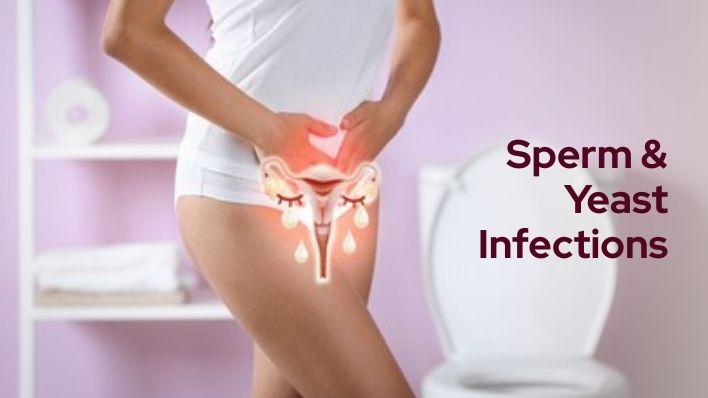
I want to offer you a clear, science-backed, and compassionate answer. While sperm itself does not directly cause a yeast infection—which is a fungal overgrowth, not an STI—the act of sexual intercourse, and the properties of semen, can definitely be a trigger for an infection in susceptible women.
Here is a comprehensive guide to understanding this delicate biological relationship and what you can do to protect your vaginal health.

DR JAY MEHTA
What Exactly Is a Vaginal Yeast Infection?
A vaginal yeast infection, medically known as vulvovaginal candidiasis, is an overgrowth of a naturally occurring fungus called Candida (most commonly Candida albicans). Think of your vagina as a delicate ecosystem, known as the vaginal microbiome.
It’s kept healthy and balanced primarily by beneficial bacteria called Lactobacilli. These “good” bacteria produce lactic acid, which keeps the vaginal environment acidic, typically at a pH level between 3.8 and 4.5.
This acidity is the vagina’s primary defense against harmful organisms, including an overgrowth of Candida.
How Can Intercourse Disrupt the Vagina’s Natural Balance?
The key to understanding the connection lies in the pH balance.
Semen is naturally alkaline, with a pH of about 7.1 to 8.0. This alkalinity is essential for protecting sperm so they can survive the acidic environment of the vagina and reach the egg.
When semen enters the vagina during unprotected sex, it temporarily raises the vaginal pH—making the environment less acidic.
For most women, the body’s natural defense systems quickly restore the balance. However, for women who are already prone to infections, this temporary alkalinity is enough to suppress the protective Lactobacilli bacteria.
This creates a window of opportunity for the Candida fungus—which thrives in less acidic conditions—to multiply rapidly, leading to the tell-tale symptoms of a yeast infection. This mechanism is one of the main ways sexual activity can trigger a fungal overgrowth.
TALK TO US
GET IN TOUCH ON
What Other Factors Might Increase My Risk After Sex?
While pH disruption is the primary biological link, a few other factors related to intimacy can increase your vulnerability:
- Can a partner transmit the fungus?
Yes, a man can carry the Candida fungus on his skin or penis, often without any symptoms (asymptomatic carriage).
During intercourse, this yeast can be introduced or reintroduced into the female partner’s vagina, especially if her protective Lactobacilli levels are already low.
This is known as the ping-pong effect, where partners can pass the infection back and forth, leading to recurrent issues. - Could friction or irritation be a factor?
Penetrative sex can sometimes cause minor irritation or tiny tears (microtears) in the sensitive vaginal lining, particularly if there is insufficient lubrication.
This physical trauma can make the vaginal tissue more vulnerable to the overgrowth of Candida. - Do certain lubricants or condoms play a role?
Some personal care products, like scented lubricants, spermicides, or certain latex condoms, contain ingredients that can irritate the vaginal tissue or further disrupt the delicate microbial balance. Always choose fragrance-free, water-based lubricants to minimize irritation.
Why Do Some Women Get Recurrent Yeast Infections, But Others Don’t?
If you find yourself getting frequent, or recurrent, yeast infections (defined as four or more per year), the issue often goes beyond a single sexual encounter. There may be underlying health or lifestyle factors that make your body more susceptible:
- Have I recently been on antibiotics?
This is one of the biggest culprits. Antibiotics kill harmful bacteria, but they also wipe out the beneficial Lactobacilli in your vagina, leaving it unprotected against Candida overgrowth.
- Do my hormones fluctuate significantly?
High estrogen levels, such as those during pregnancy, high-dose birth control pills, or certain points in the menstrual cycle, can create an environment favorable for yeast growth.
- Could a chronic condition be the cause?
Uncontrolled diabetes (high blood sugar), a weakened immune system (due to conditions like HIV or certain medications), or high stress levels all make the body more prone to recurrent infections.
What Simple Steps Can I Take to Prevent Yeast Infections After Intimacy?
Preventing vaginal pH imbalance and yeast infections often involves simple, smart hygiene and lifestyle adjustments:
- Should I use protection?
Using a condom is the most direct way to prevent semen from entering the vagina and altering the pH. This is a key step if you notice a pattern of infections after unprotected sex. - Is it important to urinate and wash up immediately afterward?
Yes. Urinating after sex helps flush out any bacteria introduced into the urethra, and a gentle external wash with warm water (no douching or harsh soaps!) can help remove residual semen and potential irritants from the vulva. - How can I support my vaginal microbiome long-term?
Focus on overall wellness. Wear breathable cotton underwear, change out of wet gym clothes or swimsuits quickly, and consider a daily oral probiotic supplement to support a healthy microbial balance. Avoid douching, as this strips away the vagina’s natural defenses.
If you are dealing with recurrent vulvovaginal symptoms that don’t seem to respond to over-the-counter treatment, or if you suspect another condition, please seek expert care.
Getting a correct diagnosis is crucial, as symptoms of a yeast infection can often mimic other issues like Bacterial Vaginosis (BV) or even some STIs.
For more clarity, you may also want to read “Can a Yeast Infection Spread Through Sex?” which explains how sexual activity can influence vaginal health and why infections may seem sexually transmitted even when they technically are not.
Conclusion: Prioritizing Your Intimate Health
Understanding the link between semen and a potential yeast infection is about empowering yourself with knowledge. It’s not about blame, but about recognizing a physiological vulnerability and taking proactive steps for your health.
Whether you are dealing with recurrent infections or simply seeking to maintain optimal intimate wellness, you deserve personalized and expert care.
As a cosmetic gynecology expert, my focus is always on the complete health and confidence of my patients.
Frequently Asked Questions (FAQs)
1. Is it normal to experience dryness or irritation during intercourse, and what can help?
Experiencing dryness or mild irritation is common, often due to hormonal changes, stress, or insufficient arousal. Using a high-quality, water-based, and un-scented personal lubricant can significantly improve comfort and reduce friction, which in turn lowers the risk of micro-abrasions that can predispose you to infections.
2. Can hormonal birth control pills make me more prone to yeast infections?
Yes, for some women, the increased estrogen levels in certain hormonal birth control pills can slightly raise the risk of yeast overgrowth because estrogen encourages the growth of the Candida fungus. If you notice a pattern, discuss alternative contraceptive methods with your gynecologist.
3. What is the difference between a yeast infection and Bacterial Vaginosis (BV)?
Both are common infections caused by an imbalance in the vaginal flora, but they involve different organisms and treatments. A yeast infection is a fungal overgrowth (yeast/Candida) typically resulting in a thick, white, cottage cheese-like discharge with itching. BV is a bacterial overgrowth that often causes a thin, gray or white discharge with a distinct “fishy” odor. They require different medications, so accurate diagnosis by a doctor is essential.
4. When should I see a specialist for my vaginal concerns?
You should consult a specialist if you have recurrent infections (four or more per year), if your symptoms do not clear up with over-the-counter treatments, if you have severe pain or swelling, or if you have symptoms combined with a fever or pelvic pain. A specialist can perform more in-depth testing to identify the exact strain of fungus or rule out other underlying causes.
5. Are there cosmetic gynecology treatments that can help with chronic vaginal discomfort or dryness?
Yes. Modern cosmetic gynecology offers non-surgical and surgical treatments focused on restoring vaginal health and function. Procedures like vaginal $\mathrm{CO}_2$ laser or radiofrequency treatments are sometimes used to improve tissue health, collagen production, and natural moisture in the vulvovaginal area, which can indirectly support a healthier microbial environment and alleviate chronic discomfort.
Related Blogs

When Vaginal Itching Needs a Doctor’s Visit?
Itching isn’t always an infection. Mumbai’s Dr. Jay Mehta explains the real causes, and when self-treatment isn’t the right approach.

Surgical Treatment for Perineal Endometriosis: Wide Excision Explained
A painful lump that worsens with your period isn’t ordinary scar pain. Mumbai’s Dr. Jay Mehta explains diagnosis and when excision is needed.

Best Gynecologist for Recurrent Genital Infections in Mumbai
Recurring symptoms aren’t always the same infection. Mumbai’s Dr. Jay Mehta explains why, and what actually needs re-evaluating.
Can Perineal Endometriosis Come Back After Surgery?
Yes, but the odds favour most patients. Mumbai’s Dr. Jay Mehta explains what actually drives recurrence, and how to lower your risk.
Does Perineal Endometriosis Always Need Surgery?
No, not always. Mumbai’s Dr. Jay Mehta explains when hormonal therapy can work, and when surgery becomes the better option.
How to Find a Menopause Specialist Who Understands GSM Treatments
Look beyond hot flashes. Mumbai’s Dr. Jay Mehta explains what a good GSM consultation should cover, and the questions worth asking.

Can Vaginal Itching Without Discharge Really Be a Skin Condition?
Vaginal itching without discharge can be caused by skin irritation, dryness, eczema or other conditions. Know the causes, treatment and warning signs.

Why Do Postmenopausal Women Experience Vaginal Itching Without Infection?
Yes, declining estrogen alone can cause itching after menopause. Mumbai’s Dr. Jay Mehta explains why, and what actually helps.
Is Vaginal Itching After Sex Always Due to an Infection?
No, it’s not always an infection. Mumbai’s Dr. Jay Mehta explains how friction, allergies and pH shifts can all cause itching too.
Can Laundry Detergent Cause Chronic Vaginal Itching?
Yes, detergent is an overlooked cause of vaginal itching. Mumbai’s Dr. Jay Mehta explains why it’s mistaken for infection, and the fix.
Book Appointment
