


Does Perineal Endometriosis Always Need Surgery?
No, surgery isn’t always necessary for perineal endometriosis, though it depends heavily on how the condition presents in your specific case.
I’m Dr. Jay Mehta, a cosmetic gynecologist at Ahalya Cosmetic Gynecology & Intimate Medicine Clinic, and this is a question I get from patients who’ve found a painful lump near an old episiotomy scar and are understandably frightened, both by the diagnosis and by the assumption that surgery is their only path forward.
Perineal endometriosis treatment usually isn’t limited to one route, though surgery does become the right one in certain situations, and I want to walk you through exactly how that decision gets made.
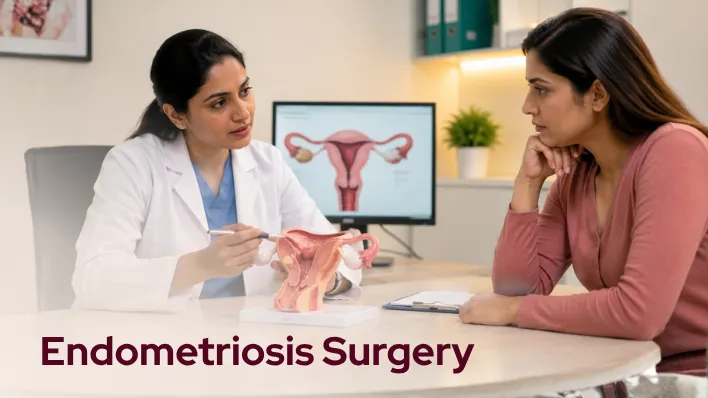

DR JAY MEHTA
Key Takeaways
- Perineal endometriosis usually develops at the site of an old episiotomy or perineal tear
- It isn’t cancer, though it can understandably feel alarming when first discovered
- Non-surgical hormonal treatment genuinely works for some patients
- Surgery becomes necessary mainly when the mass is large, painful, or not responding to medication
- Recurrence is possible either way, which is why long-term monitoring matters
TALK TO US
GET IN TOUCH ON
Does Perineal Endometriosis Always Need Surgery?
No. While surgical removal is a common and effective treatment, hormonal therapy alone has produced meaningful, lasting symptom improvement in documented cases, particularly when the mass is small and symptoms are manageable.
- The right approach depends on the size of the lesion, how much pain it’s causing, and whether you’re trying to preserve future fertility options.
- I always start by understanding what matters most to you before recommending a path, since both approaches have a real place depending on the individual case.
- This isn’t a one-size-fits-all decision, and any doctor who tells you it is without examining your specific situation isn’t giving you the full picture.
What Exactly Is Perineal Endometriosis?
Perineal endometriosis happens when tissue similar to the lining of the uterus, called endometrial tissue, grows outside the uterus, specifically at the site of a perineal scar, most often from an episiotomy during childbirth. This specific presentation, known as episiotomy scar endometriosis, is what brings most patients to me with this question.
- Endometriosis itself is a chronic condition where this tissue implants and grows in places it shouldn’t, most commonly in the pelvis, but occasionally at surgical scar sites like this one.
- It typically presents as a firm lump or nodule near the scar that causes cyclical pain, meaning the pain gets noticeably worse around your period.
- This is a benign condition. I want to say that clearly upfront, because finding an unexplained lump near a childbirth scar understandably brings up fear of something far more serious.
The U.S. National Library of Medicine’s MedlinePlus overview of endometriosis is a reliable general reference on how the condition behaves elsewhere in the body, even though the perineal presentation you’re dealing with is a much rarer variant.
What Actually Causes It to Develop on an Episiotomy Scar?
The most widely accepted explanation is that during the episiotomy or any perineal tear repair, small fragments of endometrial tissue get inadvertently implanted into the scar during healing.
- This tissue then behaves the way it would inside the uterus, responding to your monthly hormonal cycle and causing localized swelling and pain during your period.
- It’s an uncommon but recognised complication of childbirth-related perineal trauma, documented in gynecological case literature.
- It isn’t caused by anything you did wrong during delivery or recovery. It’s a tissue-implantation event that can happen during the healing process itself.
- I’ve written more on what actually causes and drives perineal endometriosis if you want the fuller picture of the risk factors beyond episiotomy alone.
How Do I Know If This Is What I’m Dealing With?
The classic pattern is a lump at your episiotomy scar site that hurts more around your period, though the presentation can vary somewhat between patients.
- Pain and swelling that clearly worsen with your menstrual cycle, rather than staying constant, is the strongest clue pointing toward endometriosis rather than a different type of scar tissue growth.
- The mass is usually firm and localized to the scar itself, not diffusely spread across the area.
- Some women also notice the lump gradually increasing in size over months or years before seeking evaluation, especially if the pain was initially mild.
- A closer look at the specific symptom pattern, including what distinguishes this nodule from an ordinary scar, may help you recognize whether what you’re feeling fits.
Our perineal endometriosis treatment page covers both the hormonal and surgical pathways in more depth, including how we assess which one fits your specific presentation.
How Is Perineal Endometriosis Diagnosed?
Diagnosis is based on a combination of your symptom pattern, physical examination, and imaging, and in some cases can be reasonably confident even before any surgical confirmation.
- I look specifically for the pattern of cyclical pain tied to a known history of episiotomy or perineal tear, which forms a strong clinical clue on its own.
- Imaging, usually ultrasound, helps confirm the size and characteristics of the mass and rules out other causes.
- A definitive diagnosis technically requires tissue confirmation, but in many cases, the clinical picture is clear enough to begin treatment, including non-surgical options, based on strong suspicion alone.
Can Perineal Endometriosis Be Treated Without Surgery?
Yes, for select patients. Hormonal therapy, typically with progestin-based medication, is a genuine option when the mass is small, symptoms are manageable, and you’d prefer to avoid surgery first.
- Progestin treatment works by suppressing the hormonal signals that drive the growth and activity of endometrial tissue, which can shrink the mass and reduce pelvic pain over time.
- Documented case reports have shown patients achieving significant symptom improvement and partial reduction in mass size with hormonal therapy alone, without ever undergoing surgery.
- This approach requires ongoing monitoring, since the response varies between patients, and it’s not guaranteed to fully resolve the mass the way surgical removal would.
- I discuss this option honestly with patients who want to avoid surgery, including the fact that recurrence or incomplete response is possible and that surgery may still become necessary later.
When Does Surgery Actually Become the Right Call?
Surgery becomes the clearer choice when the mass is large, causing significant pain that isn’t responding to hormonal treatment, or when there’s uncertainty about the diagnosis that needs tissue confirmation. This is really a question of endometriosis surgery necessity, weighed against how well non-surgical options are working for you.
- Larger lesions, or ones causing pain that interferes meaningfully with daily life, generally respond better to surgical removal than to medication alone.
- If hormonal therapy is tried first and the mass continues growing or symptoms don’t improve, surgery becomes the more appropriate next step.
If hormonal treatment hasn’t helped, or your lump keeps growing, that’s your answer on which path you’re in. Book an Appointment with Dr. Jay Mehta at Ahalya Cosmetic Gynecology & Intimate Medicine Clinic, Mumbai.
- Surgical removal also provides definitive tissue diagnosis, which matters if there’s any uncertainty about what the mass actually is.
- Laparoscopic surgery is occasionally used when broader pelvic evaluation is warranted alongside the perineal excision, though for an isolated perineal lesion, a localized direct excision is more typical.
What Does Recovery Look Like, With or Without Surgery?
Recovery differs significantly depending on which path you take, and I set expectations for both clearly before you decide.
- With hormonal therapy, there’s no procedural recovery at all, though you’ll need regular follow-up visits to track how the mass and symptoms respond over months.
- With surgical excision, recovery from this type of localized procedure is generally straightforward, with most patients returning to normal activity within a few weeks.
- Either way, ongoing monitoring matters, since both approaches carry some chance of the condition returning over time.
Can Perineal Endometriosis Come Back After Treatment?
Yes, recurrence is possible whether you choose hormonal management or surgery, which is exactly why long-term follow-up matters regardless of which path you take.
- With hormonal therapy, recurrence can happen if treatment is stopped or if the tissue doesn’t fully respond to suppression.
- Even after surgical removal, there’s a chance of recurrence, though it’s generally lower than with medication alone.
- I schedule regular follow-up visits either way, so that if symptoms do return, we catch it early rather than letting it progress unnoticed.
If you’ve found a painful lump near an old episiotomy scar and aren’t sure what your options actually are, I’d encourage seeing a gynecologist for perineal endometriosis in Mumbai rather than assuming surgery is your only path. I see patients for exactly this at Ahalya Cosmetic Gynecology & Intimate Medicine Clinic, where we assess your specific case and walk through both hormonal and surgical options honestly, based on what’s actually right for you.
Final Thoughts
Perineal endometriosis doesn’t automatically mean surgery, though it’s a genuine and effective option when the situation calls for it.
Whether hormonal therapy or surgical removal is right for you depends on the size of the mass, how much it’s affecting your life, and your own preferences around treatment.
What matters most is getting a proper evaluation rather than assuming the worst or defaulting to the most invasive option without exploring what fits your specific case. This is manageable, and you have real choices in how to approach it.
Frequently Asked Questions (FAQs)
1. How is perineal endometriosis diagnosed?
Diagnosis combines your symptom pattern, physical examination, and imaging like ultrasound, and while definitive confirmation technically requires tissue analysis, the clinical picture is often clear enough to begin treatment based on strong suspicion alone.
2. Can perineal endometriosis come back after surgery?
Yes, recurrence is possible even after surgical removal, though it’s generally less common than with hormonal management alone, which is why ongoing follow-up remains important either way.
3. Is perineal endometriosis cancerous?
No, it’s a benign condition, meaning it isn’t cancer, though the lump and pain can understandably feel alarming until you have a clear diagnosis.
4. Will future pregnancies make this worse?
There isn’t strong evidence that future pregnancies directly worsen existing perineal endometriosis, though any new perineal trauma during a subsequent delivery could theoretically create a similar risk.
5. Can I still breastfeed if I'm diagnosed with this after delivery?
Yes, a perineal endometriosis diagnosis doesn’t affect your ability to breastfeed, since treatment decisions for this condition are separate from breastfeeding considerations.
6. How long does hormonal treatment usually need to continue before I know if it's working?
Most patients and clinicians look for meaningful symptom improvement within a few months of starting hormonal therapy, though ongoing treatment is often needed to maintain that improvement.
7. Does this mean I have endometriosis elsewhere in my pelvis too?
Not necessarily. Perineal endometriosis can occur as an isolated finding at the scar site without indicating broader pelvic endometriosis, though your doctor may still want to rule that out during evaluation.
8. Is the surgery for this the same as major endometriosis surgery?
No, surgical removal of a perineal endometriosis mass is typically a localized, more straightforward procedure compared to the more extensive surgery sometimes needed for deep pelvic endometriosis.
9. Can this be prevented during future deliveries?
There’s no guaranteed way to prevent it, since it relates to how tissue heals after a perineal tear or episiotomy, though careful surgical repair technique may play some role.
10.Should I be worried if the lump isn't painful, just visible?
It’s still worth having evaluated, since even painless masses at a scar site should be properly assessed to confirm the diagnosis and rule out other causes.
Medical Disclosure
Content regarding perineal endometriosis, episiotomy scar lesions, and surgical excision is for educational purposes only and not a substitute for clinical medical advice. Always consult a qualified gynecologist for an accurate physical diagnosis and personalized treatment plan.
Related Blogs
When Vaginal Itching Needs a Doctor’s Visit?
Itching isn’t always an infection. Mumbai’s Dr. Jay Mehta explains the real causes, and when self-treatment isn’t the right approach.
Surgical Treatment for Perineal Endometriosis: Wide Excision Explained
A painful lump that worsens with your period isn’t ordinary scar pain. Mumbai’s Dr. Jay Mehta explains diagnosis and when excision is needed.
Best Gynecologist for Recurrent Genital Infections in Mumbai
Recurring symptoms aren’t always the same infection. Mumbai’s Dr. Jay Mehta explains why, and what actually needs re-evaluating.
Can Perineal Endometriosis Come Back After Surgery?
Yes, but the odds favour most patients. Mumbai’s Dr. Jay Mehta explains what actually drives recurrence, and how to lower your risk.
How to Find a Menopause Specialist Who Understands GSM Treatments
Look beyond hot flashes. Mumbai’s Dr. Jay Mehta explains what a good GSM consultation should cover, and the questions worth asking.
Can Vaginal Itching Without Discharge Really Be a Skin Condition?
Vaginal itching without discharge can be caused by skin irritation, dryness, eczema or other conditions. Know the causes, treatment and warning signs.

Why Do Postmenopausal Women Experience Vaginal Itching Without Infection?
Yes, declining estrogen alone can cause itching after menopause. Mumbai’s Dr. Jay Mehta explains why, and what actually helps.
Is Vaginal Itching After Sex Always Due to an Infection?
No, it’s not always an infection. Mumbai’s Dr. Jay Mehta explains how friction, allergies and pH shifts can all cause itching too.

Can Laundry Detergent Cause Chronic Vaginal Itching?
Yes, detergent is an overlooked cause of vaginal itching. Mumbai’s Dr. Jay Mehta explains why it’s mistaken for infection, and the fix.

Why Does Vaginal Itching Feel Worse at Night?
Yes, nighttime itching is physically real, not just in your head. Mumbai’s Dr. Jay Mehta explains why, and what actually helps.
Book Appointment
