


Can a Yeast Infection Cause Frequent Urination?
If you are experiencing yeast infection and frequent urination, you may wonder whether the two symptoms are connected.
I am Dr. Jay Mehta, and at Ahalya Cosmetic Gynecology Clinic in Mumbai, I often see women who are unsure whether their urinary symptoms are caused by a vaginal yeast infection or a urinary tract infection (UTI).
A vaginal yeast infection can cause burning or discomfort while urinating, but frequent urination is more commonly associated with a UTI or another urinary condition.
The important point is that similar symptoms can have different causes, so it is better not to self-treat without understanding what is causing them.


DR JAY MEHTA
Key Takeaways
- A vaginal yeast infection can cause burning or pain when urine touches irritated vaginal tissues.
- Frequent urination and a strong urge to urinate are more commonly linked with a urinary tract infection.
- A yeast infection and UTI can occur at the same time.
- Vaginal itching, irritation and unusual discharge are more suggestive of vaginal candidiasis.
- Testing may be needed when symptoms are persistent, recurrent or unclear.
- Appropriate vaginal yeast infection treatment depends on the diagnosis.
TALK TO US
GET IN TOUCH ON
Can a yeast infection cause frequent urination?
Yes, a vaginal yeast infection may sometimes be associated with urinary discomfort or a frequent urge to urinate, but it is not the most typical cause of frequent urination.
A yeast infection primarily affects the vagina and vulva. The resulting inflammation and irritation can cause burning when urine comes into contact with the irritated external tissues. The CDC lists external dysuria, meaning pain or burning during urination, among the symptoms of vulvovaginal candidiasis.
However, if you are repeatedly feeling that you need to urinate, especially when only a small amount of urine passes, I would also consider a UTI and other urinary causes.
The long-tail question “can a yeast infection cause frequent urination?” therefore has a nuanced answer: it can contribute to urinary discomfort, but persistent frequency or urgency should not automatically be attributed to a yeast infection.
Why can a yeast infection make urination uncomfortable?
The main reason is vaginal irritation and inflammation.
A yeast infection can cause:
- Vaginal itching
- Vulvar redness or soreness
- Irritation
- Abnormal vaginal discharge
- Burning during urination
- Discomfort during sexual intercourse
When urine touches inflamed external genital tissue, it can produce a burning sensation. This can sometimes make you feel as though the problem is coming directly from the bladder or urinary tract.
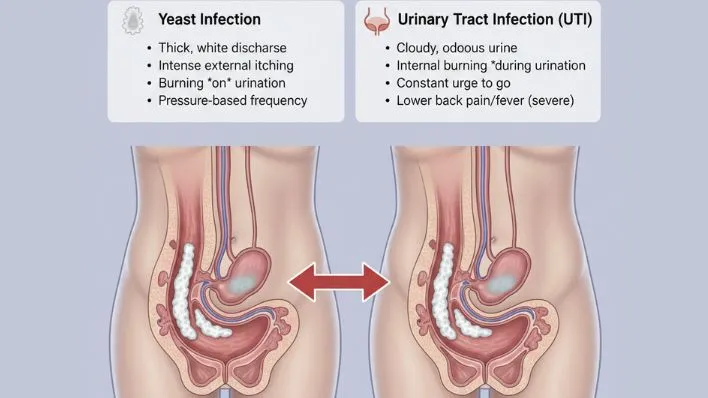
How can you tell if it is a yeast infection or UTI?
The symptoms can overlap, but there are some useful differences.
|
Symptom |
Yeast Infection |
UTI |
|
Vaginal itching |
Common |
Usually not typical |
|
Vaginal irritation |
Common |
Usually not typical |
|
Thick/abnormal vaginal discharge |
Can occur |
Usually not typical |
|
Burning during urination |
Can occur |
Common |
|
Frequent urination |
Possible, but less typical |
Common |
|
Strong urinary urgency |
Less typical |
Common |
|
Lower abdominal pressure |
Less typical |
Can occur |
|
Blood in urine |
Not typical |
Can occur |
A UTI commonly causes frequent urination, urinary urgency and burning while passing urine.
If itching and vaginal irritation are prominent, a yeast infection becomes more likely. If urinary urgency and frequency are the main symptoms, a UTI may need to be considered.
Can a yeast infection and UTI happen at the same time?
Yes. A yeast infection and UTI can occur together.
This is one reason I advise patients not to assume that all burning or urinary symptoms are caused by vaginal candidiasis. You could have vaginal itching and discharge from a yeast infection while also experiencing urinary frequency and urgency from a UTI.
When both conditions are present, treating only one may not resolve all the symptoms.
I’ve written more specifically about whether a yeast infection can actually lead to a UTI, including the rarer cases where Candida itself moves into the urinary tract, if you want the fuller picture beyond symptom overlap.
What other conditions can cause frequent urination?
Frequent urination does not always mean you have a UTI or yeast infection.
Other possible causes include:
- Increased fluid or caffeine intake
- Pregnancy
- Certain medications
- Overactive bladder
- Diabetes
- Vaginal or urinary irritation
- Other urinary tract conditions
The cause becomes more important when frequent urination continues without an obvious explanation.
If you keep needing to urinate but testing does not show a UTI, I would recommend discussing the symptoms with a doctor rather than repeatedly taking antibiotics or antifungal medicines without confirmation.
How is a vaginal yeast infection diagnosed?
Diagnosis usually starts with your symptoms and a physical examination. When the diagnosis is uncertain, a sample of vaginal discharge may be examined under a microscope or tested using culture or other laboratory methods.
This matters because vaginal itching, discharge and burning can also occur with other types of vaginitis. Treating the wrong condition may delay proper relief.
Discharge is often the first thing patients notice, and what different types of discharge actually indicate is a useful reference before your exam.
What treatment is used for a vaginal yeast infection?
Treatment depends on the diagnosis, severity and individual circumstances.
This kind of combined diagnosis and treatment, distinguishing yeast infection from UTI or another cause, is exactly what I handle at the clinic rather than treating symptoms in isolation.
Vaginal yeast infection treatment commonly involves antifungal medicines. Depending on the situation, treatment may be given as a vaginal cream or suppository, or as an oral antifungal medicine. The appropriate choice should be discussed with a healthcare professional.
I would especially recommend medical advice if:
- This is your first suspected yeast infection
- Symptoms keep returning
- Symptoms do not improve after treatment
- You are pregnant
- You have significant pain or fever
- You are unsure whether the symptoms are caused by a yeast infection or UTI
When should you see a gynecologist for frequent urination?
You should consider a gynecological consultation when frequent urination occurs with vaginal itching, discharge, irritation or burning, particularly if the symptoms are persistent or keep returning.
Seek prompt medical attention if urinary symptoms are accompanied by fever, chills, back or side pain, nausea or vomiting, as these can be warning signs of a kidney infection.
A gynecologist can assess both vaginal and urinary symptoms and recommend appropriate testing when necessary.
Can you prevent repeated vaginal irritation and urinary symptoms?
Some simple measures can help reduce irritation:
- Keep the genital area clean and dry.
- Avoid scented vaginal washes, sprays and harsh soaps.
- Change out of wet clothing promptly.
- Avoid unnecessary self-medication with antibiotics or antifungals.
- If symptoms repeatedly return, discuss possible underlying causes with your doctor.
- Maintain good overall health and manage conditions that may increase the risk of recurrent infections.
These steps cannot prevent every infection, but they can help reduce avoidable irritation and support vaginal health.
Should you consult a gynecologist for recurring symptoms?
If you repeatedly experience vaginal itching, burning while urinating, frequent urination or unusual vaginal discharge, it is worth getting the cause evaluated instead of assuming that every episode is a yeast infection.
At Ahalya Cosmetic Gynecology Clinic, I assess the combination of symptoms rather than focusing on one symptom alone. If you are looking for a gynecologist in Mumbai, a consultation can help determine whether the symptoms are related to a yeast infection, UTI or another condition and guide appropriate treatment.
Frequently Asked Questions (FAQs)
1. Can a yeast infection cause frequent urination?
A yeast infection primarily affects the vagina and vulva. The resulting inflammation and irritation can cause burning when urine comes into contact with the irritated external tissues. The CDC’s STI treatment guidelines list external dysuria, meaning pain or burning during urination, among the symptoms of vulvovaginal candidiasis.
2. Can a yeast infection feel like a UTI?
Yes. Both can cause burning or discomfort during urination. Vaginal itching and irritation are more suggestive of a yeast infection, while urinary urgency and frequent urination are more typical of a UTI.
3. Can I have a yeast infection and UTI at the same time?
Yes. The two conditions can occur together. If symptoms include both vaginal irritation and significant urinary urgency or frequency, both possibilities may need to be evaluated.
4. Can a yeast infection cause urinary urgency?
It can contribute to discomfort around urination, but persistent urinary urgency is more commonly associated with a UTI or other urinary problem.
5. Why do I keep needing to pee but have no UTI?
Frequent urination can have several causes, including increased fluid or caffeine intake, overactive bladder, pregnancy, diabetes and other urinary conditions. If it persists, medical evaluation can help identify the cause.
6. Can a yeast infection cause burning but not frequent urination?
Yes. Burning during urination can occur when urine comes into contact with irritated vaginal or vulvar tissue. This is a recognized symptom of vulvovaginal candidiasis.
7. Does white vaginal discharge always mean a yeast infection?
No. Vaginal discharge can vary normally throughout the menstrual cycle, and different infections can also cause discharge. A thick white discharge along with itching and irritation can occur with a yeast infection, but symptoms alone do not always confirm the diagnosis.
8. Can drinking water cure a yeast infection?
Drinking adequate water supports hydration but does not treat a vaginal yeast infection. A confirmed yeast infection generally requires appropriate antifungal treatment when treatment is indicated.
9. Can antibiotics cause a yeast infection?
Antibiotic use can increase the risk of vaginal yeast infection because antibiotics can alter the normal vaginal microbial environment.
10. When should I see a doctor for repeated yeast infections?
You should consult a doctor if infections keep returning, treatment does not work, symptoms are severe, or you are uncertain whether the symptoms are actually caused by a yeast infection. Recurrent symptoms may require evaluation to confirm the diagnosis and identify contributing factors.
Final Thoughts
If you are experiencing frequent urination with vaginal itching, burning or discharge, do not assume that it is simply a yeast infection. A yeast infection can cause burning when urinating, but urinary frequency and urgency are often associated with a UTI or another urinary condition.
As Dr. Jay Mehta, I recommend identifying the actual cause before starting treatment. Proper evaluation can help you receive the right treatment and avoid repeatedly using medicines that may not address the underlying problem.
Medical Disclaimer: This article is intended for general patient education and does not replace an individual medical consultation, examination or diagnosis.
Related Blogs

When Vaginal Itching Needs a Doctor’s Visit?
Itching isn’t always an infection. Mumbai’s Dr. Jay Mehta explains the real causes, and when self-treatment isn’t the right approach.

Surgical Treatment for Perineal Endometriosis: Wide Excision Explained
A painful lump that worsens with your period isn’t ordinary scar pain. Mumbai’s Dr. Jay Mehta explains diagnosis and when excision is needed.

Best Gynecologist for Recurrent Genital Infections in Mumbai
Recurring symptoms aren’t always the same infection. Mumbai’s Dr. Jay Mehta explains why, and what actually needs re-evaluating.

Can Perineal Endometriosis Come Back After Surgery?
Yes, but the odds favour most patients. Mumbai’s Dr. Jay Mehta explains what actually drives recurrence, and how to lower your risk.

Does Perineal Endometriosis Always Need Surgery?
No, not always. Mumbai’s Dr. Jay Mehta explains when hormonal therapy can work, and when surgery becomes the better option.

How to Find a Menopause Specialist Who Understands GSM Treatments
Look beyond hot flashes. Mumbai’s Dr. Jay Mehta explains what a good GSM consultation should cover, and the questions worth asking.

Can Vaginal Itching Without Discharge Really Be a Skin Condition?
Vaginal itching without discharge can be caused by skin irritation, dryness, eczema or other conditions. Know the causes, treatment and warning signs.

Why Do Postmenopausal Women Experience Vaginal Itching Without Infection?
Yes, declining estrogen alone can cause itching after menopause. Mumbai’s Dr. Jay Mehta explains why, and what actually helps.

Is Vaginal Itching After Sex Always Due to an Infection?
No, it’s not always an infection. Mumbai’s Dr. Jay Mehta explains how friction, allergies and pH shifts can all cause itching too.

Can Laundry Detergent Cause Chronic Vaginal Itching?
Yes, detergent is an overlooked cause of vaginal itching. Mumbai’s Dr. Jay Mehta explains why it’s mistaken for infection, and the fix.
Book Appointment
