


Obstetric Fistula Repair: When to Operate and When to Refer?
As a doctor, I’ve had the privilege of helping many women on their journey to healing. I understand that discussing personal health issues can be daunting, especially when they are as sensitive and isolating as an obstetric fistula.
If you’re reading this, you’ve taken a brave and important step. My goal is to walk you through this condition with compassion and clarity, explaining what it is, how it is treated, and how you can find the right help. Please know, you are not alone, and there is a clear path to reclaiming your health and dignity.
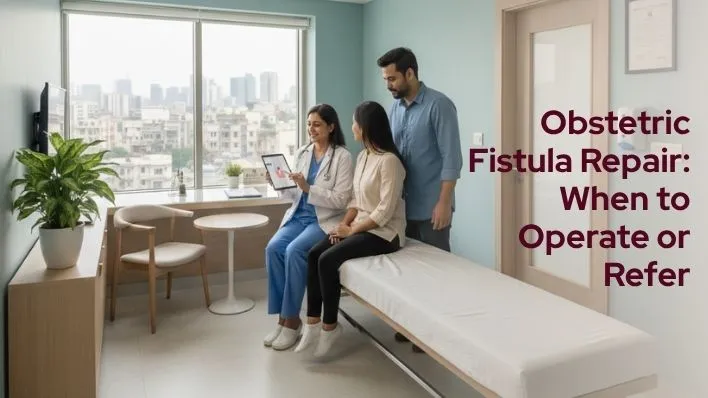

DR JAY MEHTA
What Is an Obstetric Fistula?
Let’s start by demystifying the condition. An obstetric fistula is an internal injury, a small hole that forms after a very difficult and long childbirth. This hole creates an abnormal connection between the birth canal and either the bladder or the rectum.
When the hole is between the vagina and the bladder, it’s called a vesicovaginal fistula (VVF). This results in the constant, uncontrollable leakage of urine. If the hole is between the vagina and the rectum, it’s called a rectovaginal fistula (RVF), which causes a similar leakage of faeces.
The main cause is prolonged, obstructed labour. During a difficult birth, the baby’s head can press tightly against the pelvic bones for a very long time.
This intense pressure cuts off blood flow to the soft tissues of the bladder and rectum. Without blood, this tissue dies, and a few days or weeks after the delivery, a hole forms.
This results in incontinence, which can lead to skin irritation, recurrent infections, and a foul odour that can be deeply distressing. Some women may also experience abnormal vaginal discharge, which is another sign that the tissues have been damaged or infected.
To understand more about how such symptoms may appear and what they mean, you can also read our related article on Obstetric Fistula and Abnormal Discharge for better insight and guidance.
Diagnosis: Your First Step Towards Healing
The journey to recovery begins with a conversation. Seeking a consultation is the most critical step you can take. I want to reassure you that in a clinical setting, your privacy and comfort are our highest priorities.
During your visit, we will have a private and respectful conversation about your symptoms and your childbirth experience. This helps us understand your specific situation. Following this, a gentle physical examination is necessary.
I will examine the pelvic area to find the location and size of the fistula. Sometimes, we use a harmless coloured dye to see exactly where the leak is coming from.
In some cases, a fistula may be more complex or harder to see. For these situations, we might need further tests like a CT scan to get a clearer picture of the internal tissues.
For the most complex cases, a detailed examination under anaesthesia may be required. Rest assured, every step will be explained to you, and we will only proceed with your full understanding and consent.
TALK TO US
GET IN TOUCH ON
The Path to Treatment: When to Operate?
The most effective treatment for an obstetric fistula is surgical repair. However, the timing of this surgery is crucial for success. It’s not something we rush into. Your body needs time to heal from childbirth, and the tissues around the fistula must be healthy and free from infection before we operate.
This healing period is typically about three months, though it can vary for each person. During this time, we focus on pre-operative care.
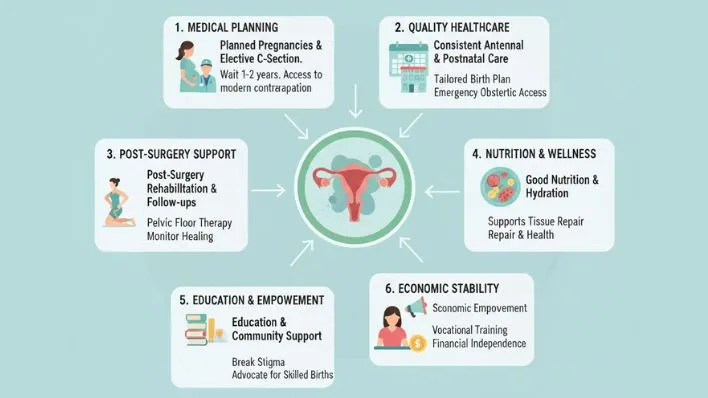
This involves treating any skin irritation, ensuring you have good nutrition to help your body prepare for healing, and managing any infections. Creating the best possible conditions before surgery gives us the highest chance of a successful repair.
The surgery itself has a clear goal: to carefully close the fistula and restore the normal separation between the vagina and the bladder or rectum. This delicate procedure is usually performed through the vagina by a surgeon with specialised skills.
If you’re facing symptoms of an obstetric fistula or need trusted obstetric fistula repair treatment in Mumbai, the caring team at Ahalya Cosmetic Gynecology is here to support your recovery with expert, personalized care.
When a Referral Is the Best Path Forward?
Sometimes, the best course of action is to refer you to a specialist. This is not a setback; it is a strategic step to ensure you receive the best possible care for your specific needs.
A referral might be necessary if the fistula is very large, if there is significant scarring from the birth injury or a previous unsuccessful repair, or if the fistula is in a difficult-to-reach location.
In these instances, you need a surgeon and a facility with extensive experience. Being referred to a cosmetic gynecology expert in Mumbai, for example, connects you with a professional who has dedicated their practice to these intricate repairs.
Many of the best Mumbai hospitals for cosmetic gynecology have teams specifically trained to handle such complex cases.
A referral ensures that your surgery is performed by someone with the advanced skills and resources needed to achieve the best outcome. It’s about matching the complexity of your situation with the right level of expertise.
Life After Surgery: Recovery and Reintegration
After the surgery, your healing journey continues. Immediately following the procedure, a urinary catheter (a thin, flexible tube) will be left in place for about two weeks.
This allows the repaired tissue to heal without any pressure from a filling bladder. We will encourage you to drink plenty of fluids to keep your system flushed and clean.
We will provide clear instructions for your recovery at home. This will include avoiding heavy lifting and refraining from sexual intercourse for a few months to give the tissues ample time to heal completely.
Follow-up appointments are vital so we can monitor your progress and ensure everything is healing as it should.Healing is not just physical; it is also profoundly emotional. Living with a fistula can be incredibly isolating.
Reconnecting with your family, friends, and community is a huge part of your recovery. The joy and relief that come with a successful repair are immeasurable. It is the moment you get to return to your life, free from the physical and emotional burden you have been carrying.
Frequently Asked Questions (FAQs)
1. Can an obstetric fistula heal on its own without surgery?
In rare instances, a very small fistula detected soon after childbirth might heal with continuous bladder drainage via a catheter. However, the vast majority of obstetric fistulas require surgical repair.
2. Will I be able to have more children after a successful fistula repair?
Yes, it’s often possible to have more children. To protect the repaired tissue, future births are almost always recommended via a planned Caesarean section before labour starts. Your doctor will provide specific guidance for your situation.
3. What is the success rate for obstetric fistula surgery?
The success rate is high, often over 90%, especially for simpler cases treated by an experienced surgeon. Complex fistulas may require multiple surgeries, but a significant improvement or complete cure is the most likely outcome.
4. Are there non-surgical ways to manage the symptoms while I wait for surgery?
While surgery is the only cure, symptoms can be managed. Maintain good hygiene by washing gently with water, patting the area dry, and using barrier creams to prevent skin irritation. Absorbent pads can also help manage leakage.
5. How long do I need to wait to resume normal activities like work after surgery?
Recovery time varies, but you’ll generally be advised to avoid strenuous activity and heavy lifting for at least a few months to allow internal tissues to heal fully. Your surgeon will provide a specific timeline for returning to your normal activities.
Conclusion
Obstetric fistula is a serious injury, but it is treatable. The key takeaways are that a successful repair is possible, the timing of the surgery is important, and finding the right surgical expertise is paramount. Whether your treatment is straightforward or requires a referral for specialised care, there is a path to recovery.
At Ahalya Cosmetic Gynecology in Mumbai, our approach is rooted in providing compassionate, people-first care. We understand the courage it takes to seek help, and we are here to support you with expertise and empathy.
If you are experiencing the symptoms described, please do not suffer in silence. Help is available, and you deserve to live a full and healthy life.
Contact us to schedule a confidential consultation. Dr. Jay Mehta and our dedicated team are here to guide you on your path to recovery and help you reclaim your life.
Related Blogs

When Vaginal Itching Needs a Doctor’s Visit?
Itching isn’t always an infection. Mumbai’s Dr. Jay Mehta explains the real causes, and when self-treatment isn’t the right approach.

Surgical Treatment for Perineal Endometriosis: Wide Excision Explained
A painful lump that worsens with your period isn’t ordinary scar pain. Mumbai’s Dr. Jay Mehta explains diagnosis and when excision is needed.

Best Gynecologist for Recurrent Genital Infections in Mumbai
Recurring symptoms aren’t always the same infection. Mumbai’s Dr. Jay Mehta explains why, and what actually needs re-evaluating.
Can Perineal Endometriosis Come Back After Surgery?
Yes, but the odds favour most patients. Mumbai’s Dr. Jay Mehta explains what actually drives recurrence, and how to lower your risk.
Does Perineal Endometriosis Always Need Surgery?
No, not always. Mumbai’s Dr. Jay Mehta explains when hormonal therapy can work, and when surgery becomes the better option.

How to Find a Menopause Specialist Who Understands GSM Treatments
Look beyond hot flashes. Mumbai’s Dr. Jay Mehta explains what a good GSM consultation should cover, and the questions worth asking.

Can Vaginal Itching Without Discharge Really Be a Skin Condition?
Vaginal itching without discharge can be caused by skin irritation, dryness, eczema or other conditions. Know the causes, treatment and warning signs.

Why Do Postmenopausal Women Experience Vaginal Itching Without Infection?
Yes, declining estrogen alone can cause itching after menopause. Mumbai’s Dr. Jay Mehta explains why, and what actually helps.

Is Vaginal Itching After Sex Always Due to an Infection?
No, it’s not always an infection. Mumbai’s Dr. Jay Mehta explains how friction, allergies and pH shifts can all cause itching too.

Can Laundry Detergent Cause Chronic Vaginal Itching?
Yes, detergent is an overlooked cause of vaginal itching. Mumbai’s Dr. Jay Mehta explains why it’s mistaken for infection, and the fix.
Book Appointment
