


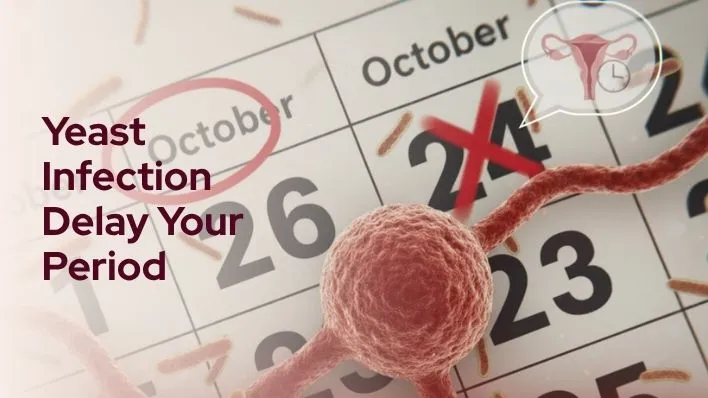
Can a Yeast Infection Delay Your Period?
As a specialist in women’s health here in Mumbai, I often speak with patients who have concerns about how different conditions might affect their menstrual cycle. One question that comes up frequently is whether a common issue like a yeast infection can interfere with their period.
It’s a valid concern, as any change in your body’s typical rhythm can be unsettling. Let’s explore the connection between yeast infections and your cycle, clear up some myths, and discuss when you should seek expert advice.

DR JAY MEHTA
What exactly is a yeast infection?
A yeast infection, medically known as candidiasis, is a fungal infection caused by an overgrowth of a yeast called Candida. Candida naturally lives in small amounts in places like your mouth, gut, and vagina without causing any harm.
However, certain factors can disrupt the delicate balance of your vaginal environment, allowing this yeast to multiply. This overgrowth leads to the uncomfortable symptoms many women are familiar with: intense itching, thick white discharge often compared to cottage cheese, and a burning sensation, particularly during urination.
Can the infection itself delay my period?
This is the central question, and the direct answer is no. A vaginal yeast infection does not directly impact the hormonal processes that regulate your menstrual cycle.
Your period is controlled by a complex interplay of hormones like oestrogen and progesterone, which orchestrate the shedding of your uterine lining.
The fungal overgrowth happening in the vagina is a localised issue and does not interfere with this hormonal system. Therefore, the infection itself is not a cause for a delayed period.
TALK TO US
GET IN TOUCH ON
Then why might my period be late?
If a yeast infection doesn’t delay your period, why do some women notice a late period around the same time they have an infection? The answer often lies in the underlying factors that can trigger both conditions. Stress is a major contributor.
High levels of physical or emotional stress can disrupt the hormonal balance that governs your menstrual cycle, potentially causing a delay. Stress can also weaken your immune system, creating an environment where a Candida overgrowth is more likely to occur.
So, while the yeast infection isn’t the cause, the stress you are experiencing could be the culprit behind both the infection and the late period.
Other factors that can throw your body off balance include significant changes in diet, new medications (like antibiotics), or underlying health conditions such as thyroid disorders or polycystic ovary syndrome (PCOS).
When should I be concerned about a late period?
While a one-off late period is usually not a cause for alarm, there are times when it’s wise to seek a professional opinion. If your period is more than a week late and you have ruled out pregnancy, it’s a good idea to consult a doctor.
Additionally, if you experience recurrent yeast infections—meaning four or more in a year—it is important to get a proper diagnosis. Chronic infections can sometimes point to an underlying medical issue that needs to be addressed.
As a cosmetic gynecology expert , I help patients get to the root cause of recurrent problems, offering solutions beyond just temporary relief.
Many patients also ask about Yeast Infections and Pregnancy, and understanding this connection helps create continuity and deeper insight into how vaginal health can affect your overall reproductive wellness.
How are yeast infections properly diagnosed and treated?
Self-diagnosing a yeast infection can be unreliable, as other conditions like bacterial vaginosis can have similar symptoms. For an accurate diagnosis, a doctor will typically discuss your symptoms and may take a small swab from your vagina to examine under a microscope or send for a culture.
This confirms the presence of a yeast overgrowth and rules out other issues.Treatment is usually straightforward, involving antifungal medications. These can be prescribed as oral tablets, creams, or vaginal suppositories.
For persistent or complex cases, more advanced cosmetic gynecology treatment options are available to provide lasting relief. We focus on creating a personalised treatment plan for each patient.
How can I prevent yeast infections in the future?
Preventing yeast infections involves maintaining a healthy vaginal environment. Simple lifestyle habits can make a big difference. Wear breathable cotton underwear and avoid tight-fitting clothing that traps heat and moisture.
Always change out of damp clothes, like workout gear or swimwear, as soon as possible. Avoid using scented soaps, douches, or feminine sprays, as these can disrupt the natural balance of your vaginal flora. For some women, reducing sugar intake and incorporating probiotics into their diet can also be beneficial.
Many patients also ask: How Do I Prevent Yeast Infections? These steps help you stay in control of your vaginal health.
Your Health is Our Priority
Navigating concerns about your gynaecological health can feel overwhelming, but you don’t have to do it alone. Understanding your body is the first step toward empowerment.
While a yeast infection is unlikely to be the reason for a late period, paying attention to what your body is telling you is crucial.If you’re dealing with recurrent infections, menstrual irregularities, or any other gynaecological concerns, seeking specialised care is essential.
As the cosmetic gynaecologist in Mumbai, my team and I at Ahalya Aesthetic and Cosmetic Gynecology Clinic are dedicated to providing compassionate, expert care.
We offer everything from accurate diagnosis to minimally invasive surgery for complex gynaecological conditions.
Don’t let uncertainty affect your well-being. Schedule a consultation to receive a personalised care plan tailored to your needs. Visit to Clinic or book your appointment and take the first step towards better health.
Frequently Asked Questions (FAQs)
1.Can my period medication cause a yeast infection?
Certain medications, particularly broad-spectrum antibiotics, can disrupt the natural balance of bacteria in the vagina, which can lead to an overgrowth of yeast. Pain relievers taken for period cramps, like NSAIDs, do not typically cause yeast infections.
2. Is it safe to use an antifungal cream during my period?
Yes, it is generally safe to use topical antifungal creams or suppositories during your period. However, the menstrual flow might make the treatment a bit messy and potentially less effective. An oral antifungal pill might be a more convenient option if you have your period.
3. Could my birth control be causing my yeast infections?
Hormonal contraceptives, especially those with higher levels of oestrogen, can sometimes increase a woman’s risk of developing yeast infections. If you suspect a link, discuss it with your doctor. They might suggest a different type or dosage of birth control.
4. Can I pass a yeast infection to my partner?
While a yeast infection is not considered a sexually transmitted infection (STI), it is possible to pass the fungus to a sexual partner, though it is uncommon. Men can develop a condition called balanitis (inflammation of the head of the penis) from it.
5. How long does it take to recover from a yeast infection?
With proper treatment, symptoms of a simple yeast infection usually begin to improve within a few days, and the infection typically clears up completely within a week. For more complicated or severe infections, the recovery period may be longer.
Related Blogs

When Vaginal Itching Needs a Doctor’s Visit?
Itching isn’t always an infection. Mumbai’s Dr. Jay Mehta explains the real causes, and when self-treatment isn’t the right approach.

Surgical Treatment for Perineal Endometriosis: Wide Excision Explained
A painful lump that worsens with your period isn’t ordinary scar pain. Mumbai’s Dr. Jay Mehta explains diagnosis and when excision is needed.

Best Gynecologist for Recurrent Genital Infections in Mumbai
Recurring symptoms aren’t always the same infection. Mumbai’s Dr. Jay Mehta explains why, and what actually needs re-evaluating.
Can Perineal Endometriosis Come Back After Surgery?
Yes, but the odds favour most patients. Mumbai’s Dr. Jay Mehta explains what actually drives recurrence, and how to lower your risk.
Does Perineal Endometriosis Always Need Surgery?
No, not always. Mumbai’s Dr. Jay Mehta explains when hormonal therapy can work, and when surgery becomes the better option.
How to Find a Menopause Specialist Who Understands GSM Treatments
Look beyond hot flashes. Mumbai’s Dr. Jay Mehta explains what a good GSM consultation should cover, and the questions worth asking.

Can Vaginal Itching Without Discharge Really Be a Skin Condition?
Vaginal itching without discharge can be caused by skin irritation, dryness, eczema or other conditions. Know the causes, treatment and warning signs.

Why Do Postmenopausal Women Experience Vaginal Itching Without Infection?
Yes, declining estrogen alone can cause itching after menopause. Mumbai’s Dr. Jay Mehta explains why, and what actually helps.
Is Vaginal Itching After Sex Always Due to an Infection?
No, it’s not always an infection. Mumbai’s Dr. Jay Mehta explains how friction, allergies and pH shifts can all cause itching too.

Can Laundry Detergent Cause Chronic Vaginal Itching?
Yes, detergent is an overlooked cause of vaginal itching. Mumbai’s Dr. Jay Mehta explains why it’s mistaken for infection, and the fix.
Book Appointment
